

How often is acupoint embedding done after an assessment?
The most useful answer to how often is acupoint embedding done begins with the reason for the follow-up. A return visit is an opportunity to revisit the concerns brought to the consultation, the information recorded at the previous visit, and any meaningful changes that have occurred in the meantime. It is not simply a space on a repeating calendar. At TCM Weight Lab, practitioner Chan sees clients in person before deciding the plan for that visit and discussing whether another appointment should be arranged.
An acupoint embedding assessment gives the conversation somewhere concrete to start. Clients can describe what they hope to work on in weight management, share relevant health information, and raise questions that might affect their practical availability. At a first visit, the discussion commonly includes medical history, weight and lifestyle habits. The health declaration is completed at the clinic. This information is more helpful than trying to infer a personal interval from a friend’s schedule, an online claim, or the number of sessions in a package.
Timing also has an everyday dimension. A client may need to fit a visit around work, travel, caregiving, or another health appointment. Those realities are worth mentioning rather than silently missing an appointment or trying to compress several visits together. A useful plan allows the practitioner and client to talk plainly about the next sensible date, while the booking team confirms what appointment times are available at the selected clinic.
Why how often is acupoint embedding done depends on the consultation
The question is sometimes framed as though every person should follow one sequence: attend, wait a fixed number of days, and repeat. In practice, a consultation can reveal reasons to slow down, discuss a change, or make a later booking instead. The value of asking early is that it avoids treating a previous date as an automatic instruction. If your priorities, health information, or availability have changed, say so at the next contact. The practitioner can then address the timing question in the context of your own appointment rather than through a generic online answer.

Understanding the acupoint embedding session interval
At these clinics, visits are usually arranged about four days apart. “Usually” matters: it describes a common clinic arrangement, not a rule that applies identically to every client. The interval gives a convenient point at which a return visit may be considered, but it does not replace the discussion that happens before an appointment is booked. A different date can be appropriate when the practitioner’s assessment or the client’s circumstances call for it.
Thinking about the acupoint embedding session interval as a conversation rather than a countdown makes the information easier to use. Instead of asking only, “What day am I due?”, a client can ask what the next visit is intended to review, what changes should be mentioned, and whether the proposed time works with other care already in progress. This approach keeps scheduling connected to the purpose of follow-up rather than treating it as a test of whether someone has followed a perfect routine.
The interval is also different from the duration of the appointment itself. A person arranging a return visit may need to know how much time to reserve on the day, while another may be asking how many days lie between visits. These are separate planning questions. For a focused guide to the first one, see how long does acupoint embedding take; it helps clients prepare time for a consultation without confusing visit length with the gap before a subsequent appointment.
Why an interval of about four days is a usual arrangement
A four-day pattern can make it easier for the clinic and client to organise continuity, particularly when someone is beginning a series of visits. It should be understood as an ordinary operational rhythm, not as a statement about everyone’s health needs or a target to chase. There is no advantage in forcing a visit into a date that no longer fits the conversation. When an earlier plan changes, contact the team, explain the scheduling issue, and ask for an available time so the next step can be discussed properly.

What a follow-up visit can clarify
A follow-up is most useful when it turns general intentions into a clear discussion. Bring up changes in your routine, concerns you have noticed, questions about the schedule, and any new information that may be relevant to the practitioner. The point is not to produce an ideal report. It is to give an accurate picture of what has happened since the last consultation, so that the next appointment can be considered with the right context.
This is also a good time to distinguish a plan from a purchase. Someone comparing options may ask how many acupoint embedding sessions are available or how a package is priced. Those are understandable practical questions, but a package count does not decide a personal follow-up date. The dedicated page on how many acupoint embedding sessions separates session-count questions from the conversation about what may be discussed at an individual appointment.
The table below is a simple prompt for preparing a follow-up conversation. It is not a checklist for self-treatment or a substitute for raising something important as soon as it occurs. A short note on your phone can help you remember the practical points that matter when you contact the clinic.
Using an acupoint embedding follow-up interval to guide discussion
An acupoint embedding follow-up interval has more value when it helps people communicate clearly. Record the date of your last visit, note any scheduling constraints, and list questions that need an answer before you choose a new time. If a change in health, medication, or a symptom is part of the picture, mention it directly rather than reducing it to a calendar question. The practitioner can then decide what deserves attention in the consultation and the team can help with the practical booking details.
| Bring to the conversation | Why it helps | A useful way to phrase it |
|---|---|---|
| Date of the last visit | Places the scheduling question in context | “My last visit was on this date; when should I discuss coming back?” |
| Changes in health or medicines | Helps ensure relevant information is raised | “There has been a change I would like to mention before setting the next date.” |
| Questions about the plan | Keeps the consultation focused on what matters to you | “What should this follow-up help us review?” |
| Work and travel constraints | Lets the team check realistic appointment options | “These are the times I can attend; what is available?” |

Research schedules do not set your clinic schedule
It is easy to find a numerical interval in a paper and mistake it for personal scheduling advice. For example, a 2015 systematic review of acupoint catgut embedding studies stated that the treatment frequency in the included literature was normally once a week. The same review reported limitations including small samples and lower-quality trials. That one-week figure describes the review’s research context; it does not prescribe the timing of a TCM Weight Lab appointment, and it cannot be transferred to an individual visit plan. [S2]
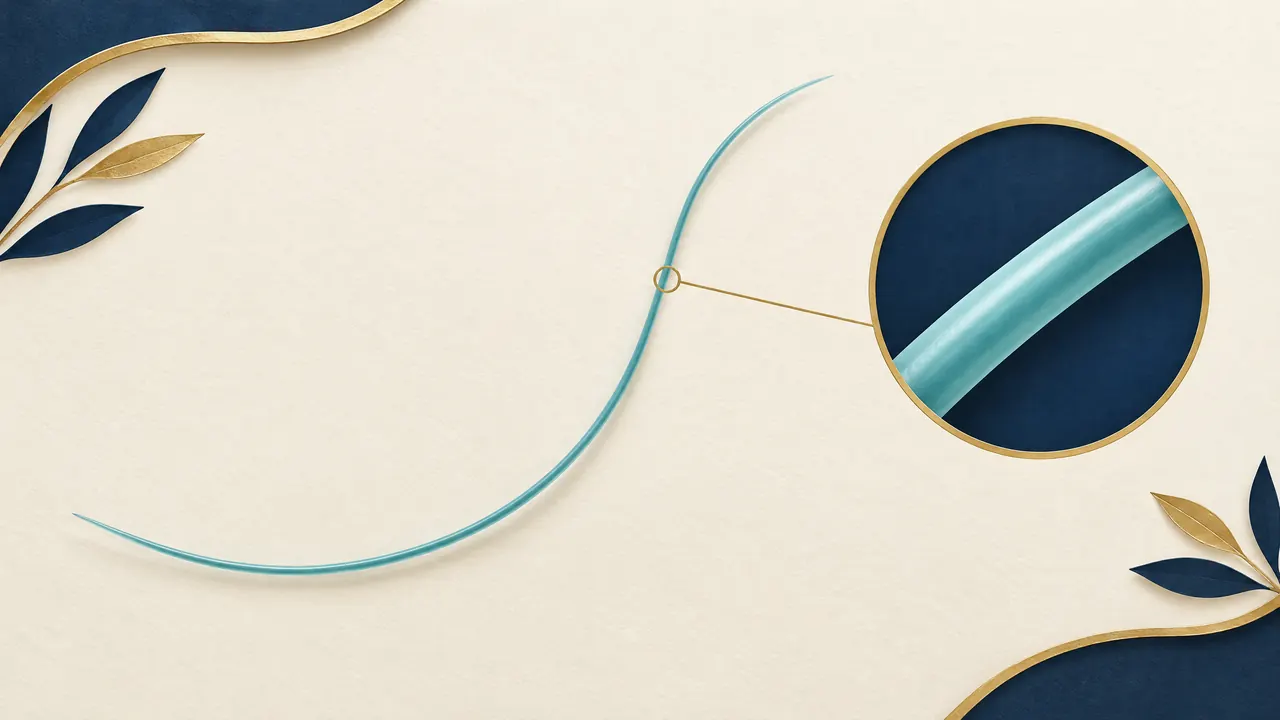
Research terminology can add another layer of confusion. Many studies use catgut embedding, while the service here confirms PDO, or polydioxanone, thread material. A finding about one study material, its protocol, and its participants does not settle the timing question for another material and a different consultation setting. Reading the methods of a study is helpful for understanding what was tested, but a study schedule is not a replacement for an in-person assessment.
It is equally important not to treat a booking interval as evidence about material absorption. If your question is how long does pdo thread take to dissolve, it needs to be addressed as a material-information question, not answered by counting days on an appointment card. The PDO absorption-time page explains why literature and material information should be kept separate from an individual follow-up timetable.
An acupoint embedding follow-up interval is not a PDO absorption timetable
The interval between two appointments is organised around a clinical conversation and availability. It does not reveal a fixed rate at which PDO is absorbed, nor does it establish that a material process is the same for every person. Keeping these questions apart prevents a common misunderstanding: a calendar gap can be useful for arranging care, whereas a material claim requires evidence that applies to the material and question being asked. Ask the clinic about your next appointment, and explore material questions through the information specifically written for them.
When timing should be reconsidered
A previous plan may need another conversation when something relevant has changed. This can include a new medicine, a new diagnosis, a skin issue in an area of concern, pregnancy or an attempt to become pregnant, a history of bleeding problems, or a schedule change that makes the proposed date unrealistic. Do not wait until you are in the treatment room to raise information you already know may matter. Contact the clinic and explain what has changed so the appropriate next conversation can be arranged.
Safety concerns should never be handled as a routine booking matter. For acupuncture generally, the U.S. National Center for Complementary and Integrative Health notes that serious adverse effects, including infection, can occur when treatment is not delivered properly, and advises people not to delay seeing a health-care provider about a health problem. [S1] The source is about acupuncture broadly rather than a description of every embedding experience, but it supports a sensible priority: new or concerning health symptoms deserve prompt clinical attention, not a guess based on the date of the next visit.
For background on ordinary acupuncture care, Guy’s and St Thomas’ NHS Foundation Trust lists minor bleeding, bruising, mild pain, drowsiness, and dizziness among possible effects and says the number of sessions depends on the person’s condition. [S3] These general acupuncture points do not determine what any individual will experience after embedding. They do underline why clear communication with a qualified practitioner is more useful than applying someone else’s timetable to yourself.
Symptoms should lead the conversation, not the calendar
If you are worried about redness, warmth, swelling, discharge, increasing pain, fever, or a rapidly worsening symptom, seek appropriate medical advice promptly instead of waiting for the next planned visit. The page on thread embedding infection signs helps explain why these changes should be treated as health concerns rather than scheduling puzzles. For less urgent questions, describe what has changed when you contact the clinic so the team can direct the enquiry appropriately.

Arranging your next acupoint embedding appointment
When you are ready to ask about another visit, TCM Weight Lab’s team can check available appointment times and pass forward a question about follow-up timing. You may choose between Harmonia TCM in Kwun Tong and Neuron Physio TCM in Prince Edward. Let the team know which location suits you, the date of your last visit, and your preferred consultation language when you enquire. Attendance times are confirmed through booking, so a message is the practical first step rather than assuming a clinic is open at a particular hour.
You can also use the booking conversation to confirm what you need for the visit itself. This might include asking whether to reserve extra travel time, whether a particular day is available, or whether a question should be discussed with practitioner Chan at the appointment. Clients looking for a general booking route can use book acupoint embedding hong kong, while those reviewing the consultation process can return to acupoint embedding assessment before choosing a date.
A well-prepared enquiry is brief and specific: state that you want to discuss your next follow-up, identify the preferred clinic, and mention any major change that affects the conversation. That gives the team the information needed to help with a suitable appointment request and gives you room to raise the questions that matter most.
How often is acupoint embedding done becomes a useful appointment question
Instead of looking for a universal answer, use the question to start a clearer consultation: “I had my last visit on this date. What should we discuss before arranging the next one?” This wording connects timing to your current situation and avoids mixing it up with a package, an online study protocol, or a PDO material question. Send a WhatsApp enquiry to begin that conversation and confirm an available in-person appointment.

Your questions, answered
Frequently asked questions
Is an acupoint embedding session always repeated after four days?
No. About four days is a usual clinic arrangement, but the timing of another visit is discussed after assessment and may vary with the individual situation and appointment availability.
Does a follow-up interval show how long PDO threads take to be absorbed?
No. The date of a follow-up appointment and a question about PDO material absorption are different matters. A clinic interval should not be used as a PDO absorption clock.
What should I mention when asking to change my next appointment?
Share the date of your last visit, your preferred location, scheduling constraints, and any relevant change in health or medicines. The team can check available times and help arrange the right next conversation.
References & further reading
Make your next step a conversation
Talk to the TCM Lab team
Send a WhatsApp enquiry to discuss your next in-person consultation and confirm an available time.