
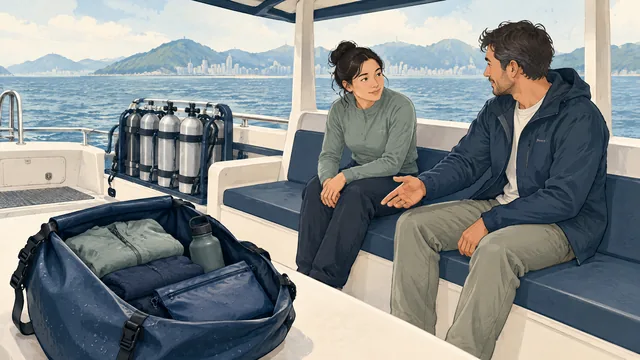
Plan for surface conditions, not only water temperature
Think through the whole outing before choosing what to wear. Will you wait at an exposed pier, spend much of the interval on board, or change clothing only after returning ashore? Water temperature is just one part of the question. DAN recommends considering topside temperature, dive duration and the underwater environment when planning protection against cold. Dry clothes and a towel should be ready when you leave the water, rather than buried under the rest of your luggage. [S3]
For a certified diver considering a Hong Kong fun dive, DiveHarbour’s guide is a useful starting point for asking about the surface interval, planned conditions and supervision. Add your own experience to that conversation: perhaps you became cold late in a previous outing, found a boat ladder tiring, or struggled to get comfortable in hired equipment. These details help the team discuss a suitable plan; the name of an activity alone cannot establish your readiness. [S1]
Avoid choosing clothing only by the month on the calendar. Ask the team what exposure protection they propose for the actual outing and whether you can check the fit in advance. If a different suit or extra accessories are suggested, allow time for professional orientation. A change in exposure protection can affect buoyancy, and a drysuit requires additional training and skills. Buying warmer equipment does not remove the need for that preparation. [S3]
Build a dry-bag kit you can actually reach
Separate your between-dive essentials from your homeward-change clothes. A small bag containing a towel, dry top and insulating layer is easier to reach than a large holdall packed for the whole day. Keep wet items apart from dry clothing. Before boarding, ask where personal bags will be secured and which storage area remains accessible during the interval. A carefully packed layer is little use if retrieving it means stepping over cylinders or interrupting the crew. [S2]
Use the table as a packing conversation, not as a promise that the boat supplies these items. DAN’s cold-exposure advice supports having dry clothing, towels and suitable windproof layers ready. The remaining choices depend on the boat layout and your needs. Try opening your bag at home with everything packed: if the towel is beneath your shoes and lunch, change the order before leaving. [S3]
| Item or arrangement | Useful purpose | Packing or booking check |
|---|---|---|
| Dry towel and spare top | Dry off and replace damp clothing when safe to change | Place near the opening; confirm changing space and privacy |
| Insulating layer and windproof outer layer | Help limit further heat loss on a cool, exposed deck | Keep dry; choose manageable clothing without trailing straps |
| Separate wet-item pouch | Keep used clothing away from the next dry layer | Check that it closes securely and fits inside permitted luggage |
| Drinking water and familiar snack | Make an ordinary rest break easier to manage | Ask what is supplied; use secure containers and check dietary needs |
| Sun protection and removable light layer | Allow adjustment when the deck becomes warm | Confirm shaded seating rather than assuming a canopy is available |
| Sheltered resting place | Offer a suitable place to sit between activities | Ask about seating, spray exposure and where a non-diving participant waits |
Ask about the boat, not just the number of dives
A useful comparison of a Hong Kong boat dive price includes the surface arrangements you will actually use. DiveHarbour’s boat guide advises obtaining written details of the boat, timings, equipment and support. Ask whether the proposed vessel has sheltered seating, whether you can change safely, how bags are stored and what the interval is expected to involve. A trip advertised with two dives does not, by itself, answer any of those questions. [S2]
Ask who to approach if you feel cold, seasick or too tired to continue. Clarify how the buddy plan changes if one person sits out and where that person will remain while others dive. Also ask how the team contacts emergency services and what emergency support is carried. These are questions to put to the operator, not features to infer from photographs. Raise any mobility concern early so the entry, exit and deck arrangements can be discussed before payment.
Leave some flexibility around the estimated return. Conditions and operational decisions can change the site or timing. Read the financial terms separately from the safety plan: DiveHarbour’s current published terms state that all paid fees are non-refundable. Make-up sessions apply only when the written enrolment terms permit them; dates, locations, places and deadlines need written confirmation. Do not assume that weather changes or choosing to stop creates a refund or a guaranteed replacement date. [S2]
Make the interval a real pause
Once the crew has directed the equipment handling, use the break to get comfortable rather than immediately starting another task. Sit in the agreed place, keep essentials within reach and give yourself time to notice whether you feel different from before the dive. Arriving rested and leaving room for a calm briefing are part of preparation too. Avoid planning an early departure straight after an exhausting work shift and hoping that the boat ride will make up for it. [S1]
Comfort also means avoiding excessive heat. DAN explains that a fully zipped neoprene wetsuit can retain heat and moisture on a warm deck, contributing to dizziness and nausea. In warm conditions, minimise unnecessary time fully suited before entry and follow the team’s timing instructions. After the dive, adjust clothing when it is safe to do so. A dry layer for a cool ride and shade for a hot wait can both belong in the same day’s plan. [S4]
Have drinking water available and choose familiar food that fits the confirmed arrangement. DAN recommends non-alcoholic warm beverages and snacks as part of cold-weather preparation, but neither a drink nor a snack is a treatment for unexplained symptoms. If you start feeling sick, tell the leader instead of trying to decide whether the cause is the boat, your suit or something else. Heat stress and possible diving illness can share symptoms such as dizziness; that overlap is a reason to report them, not to diagnose yourself. [S3] [S4] [S5]
Know when tiredness needs attention
Do not label new or unusual post-dive fatigue as simply the price of a busy day. DAN lists unusual fatigue among possible symptoms of decompression sickness, alongside symptoms such as tingling, weakness, joint pain, a blotchy rash, dizziness and breathlessness. Some presentations are subtle, and decompression illness can occur even when a diver has followed accepted guidelines. A reassuring computer record is not a medical assessment. [S5]
If fatigue feels unusual or you develop unexplained symptoms after diving, stop further diving, tell the leader promptly and seek medical advice without waiting for the end of the itinerary. Note when symptoms began and keep your recent dive information available for medical personnel. Breathing difficulty, confusion, collapse or other severe symptoms require emergency services immediately. DAN advises calling local emergency services first in a dive accident or injury, then contacting DAN. Do not delay care to arrange your own chamber visit. [S5] [S6]
Cold deserves the same willingness to speak up. Shivering can be a warning sign; confusion or slow breathing is more serious. Alert the crew and stop the plan rather than treating persistent cold as a challenge to overcome. Dry insulating and windproof clothing helps limit further heat loss, but someone who may be hypothermic needs attention, not simply a jacket and permission to continue. This is not a situation for a self-directed warming experiment or another dive. [S3]
Let current readiness decide the next entry
Before the next briefing, give your buddy and leader a clear update. “I felt cold towards the end and am still shivering” is more useful than “I’m probably fine”. You can decline another dive even when everyone else wants to continue. Discuss the resulting buddy and boat arrangements with the leader rather than allowing your partner to enter alone or assuming another participant will take over. The outing must still fit the people taking part. [S1] [S2]
If boat handling and basic equipment tasks already feel unfamiliar after a break, ask about a Hong Kong scuba refresher boat dive before committing to the trip. DiveHarbour distinguishes supervised proficiency review from ordinary guiding and notes that the appropriate setting may be confined water, open water or a combination. A refresher addresses readiness and skills; it is not a cure for cold, fatigue or an illness. [S1]
Use the official medical questionnaire honestly and seek physician evaluation when it indicates that you should. Changed health, recent illness or new medication belongs in that process, not in a last-minute reassurance from a buddy. For your next enquiry, describe both your dive history and the surface experience you need: reachable dry storage, manageable access, room to rest and a clear person to tell if you cannot continue. That gives the conversation a practical focus before you choose a date. [S2] [S6]
Questions you may be asking
Should I stay fully zipped into my wetsuit throughout the interval?
Not automatically. A zipped wetsuit can contribute to heat stress on a warm deck, while cool conditions call for protection against heat loss. Adjust clothing safely in the crew-approved area and follow the next-entry timing. Ask about changing space before booking. [S3] [S4]
Can this article tell me which wetsuit thickness to hire?
No single thickness suits every person and outing. Discuss anticipated conditions, fit, exposure time and your previous cold experience with the dive professional. Changes in protection can affect buoyancy and need proper preparation; a drysuit also requires additional training. [S3]
Does warming up mean I can safely do the next dive?
Feeling warmer does not establish readiness or rule out a medical problem. Tell the leader about persistent cold or any unusual symptoms. Suspected diving illness still needs professional assessment even if symptoms appear to resolve. [S3] [S5]
What if my buddy wants to continue but I need to sit out?
Tell the leader before the group prepares to enter. Ask how buddy pairing and your place on the boat will be managed. Do not agree to continue merely to preserve the original pairing, and do not assume your buddy may dive alone. [S1] [S2]
What should I say when reporting unusual tiredness?
Describe what feels different, when it began and any other symptoms, rather than offering a diagnosis. Make your recent dive information available. Seek prompt medical advice; severe symptoms need emergency services immediately, followed by DAN contact as appropriate. [S5] [S6]