
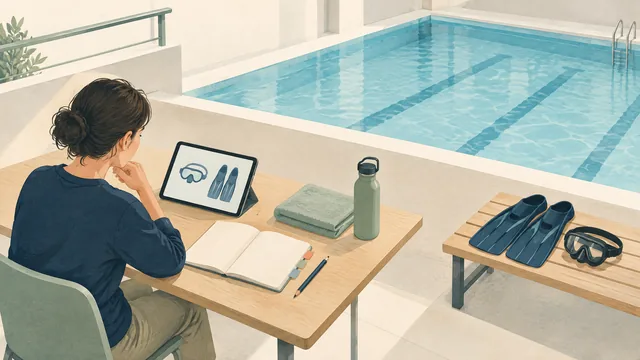
Start with the practical session, not the progress bar
Before settling into a study routine, ask what must be completed before the first water session and how the instructor wants to receive your learning record. Clarify which course and materials you are using, the intended language of instruction and where unresolved questions can be sent. This avoids a frustrating situation: you have spent several evenings studying, but nobody has agreed how that work connects to the practical course.
For a local starting point, DiveHarbour’s PADI eLearning Open Water Hong Kong guide explains the relationship between digital theory and the practical stages; use it to ask who coordinates your learning access, confined-water practice and open-water training. Its emphasis is on connecting the stages rather than treating an online purchase as a complete qualification. Confirm the actual arrangement before buying materials or fixing your calendar. [S1]
Then give each study session a manageable purpose. You might review one topic after dinner and revisit an unclear explanation another evening. Leave room to think rather than squeezing every module into the night before the pool. A useful stopping point is being able to describe the main idea in ordinary words and identify the part that needs clarification. Complete the course’s required checks as instructed; your own notes are an addition, not a replacement. [S3]
Keep a question notebook, not a second textbook
Use three simple headings in your notes: the topic, what you think it means and the question you still have. Keep the course section or lesson reference beside each entry so you can find the original explanation again. You do not need to copy whole paragraphs. A short note such as ‘I recognise the buoyancy-control device, but I am unsure which parts I will need to identify on the supplied kit’ gives an instructor something specific to discuss.
When a knowledge-check answer surprises you, record why your original choice seemed reasonable. Perhaps you misread a qualifier, mixed up two equipment names or recognised a rule without understanding its purpose. That distinction matters: repeating an answer until it looks familiar may hide the exact confusion you need help with. PADI’s certification FAQ explicitly encourages students to tell their instructor when they do not understand something. [S3]
Keep language questions separate from practical concerns. If you study in English but usually discuss swimming in Cantonese, note unfamiliar terms in both languages where helpful and ask the instructor to confirm the intended meaning. Avoid assembling your own underwater signal system from different videos. Bring any uncertainty about signals to the briefing, where you can check what the instructor and your buddy will use.
Turn familiar topics into better pool-side questions
Online demonstrations can make equipment and skills look familiar before you encounter them. Familiarity is useful, but it is not proof that you can carry out a skill while wearing the actual kit. PADI describes videos as previews and says an instructor demonstrates the skills during training. Confined water means a pool or a setting with pool-like conditions; it does not necessarily mean every course meets inside a swimming-pool building. [S3]
Use the table to convert a vague worry into a question the instructor can answer. These are prompts for a supervised lesson, not instructions for practising scuba skills at home or in a public pool. Pick the few entries that fit your concerns instead of bringing a long list that distracts you from the briefing.
For example, ‘I am nervous about the mask exercise’ is a useful opening. Adding ‘Could you explain how I can ask for a pause before we begin?’ makes the concern easier to address. You are not asking to bypass the skill; you are asking to understand the learning process. Keep the same distinction when watching a confident demonstration online: your next step is guided practice, not trying to reproduce it alone.
| Topic you reviewed | Useful note to bring | Question for the instructor |
|---|---|---|
| Equipment names | The two components you keep confusing | Can you identify these on the kit I will use? |
| Buoyancy | What you understand about its purpose | What feedback will help me recognise progress during practice? |
| Mask and regulator skills | The part of the demonstration that concerns you | How will you introduce the skill and let me request a pause? |
| Buddy communication | A signal or instruction you are unsure about | Which signals will we confirm together before entering? |
| Pressure and ear comfort | Any previous discomfort you need to report | Who should assess this concern before I take part? |
| Learning records | Your completed work and unresolved topics | Which record do you need, and when should I send it? |
Prepare for assessment without turning it into a race
Pool preparation includes being honest about your present swimming comfort. If you have not swum recently, or you feel uneasy away from the pool edge, tell the instructor before the training date. Ask about the applicable water-skill assessment and whether separate swimming support should come first. An online quiz cannot answer those questions for you, and an old swimming achievement does not describe how comfortable you feel today.
PADI’s public FAQ lists a continuous 200-metre swim, or a 300-metre swim using mask, fins and snorkel, plus ten minutes of floating or treading water among its basic water-skill requirements. It states that the swim has no time limit. These belong to the PADI pathway, not a universal rule for every agency. Discuss the assessment with your instructor rather than attempting a self-test in an unsuitable or unsupervised setting. [S3]
When considering a PADI Open Water course Hong Kong, ask how knowledge review, practical feedback and any additional practice will fit together. DiveHarbour’s course guide encourages questions about assessment and learning pace. PADI itself describes certification as performance-based: knowing the material and demonstrating the required skills matter, not simply attending on the planned dates. Treat feedback as information about the next learning task, rather than a verdict on whether you are naturally ‘good at diving’. [S5] [S3]
Handle health and practical arrangements before pool day
Do the health paperwork early enough to follow its instructions properly. DAN advises answering the Diver Medical Participant Questionnaire honestly and seeing a physician when the questionnaire indicates this is needed. Your instructor can explain the course process, but neither an online lesson nor a reassuring booking conversation provides medical clearance. Report health changes, recent surgery, medication and relevant breathing or ear concerns through the appropriate private process. [S4]
If you develop a cold before the session, contact the instructor rather than arriving and hoping shallow water makes it irrelevant. DAN notes that a common cold can affect pressure equalisation in the ears and sinuses as well as exercise ability. Get appropriate medical guidance where needed, and do not use a booked date as a reason to dismiss symptoms. [S4]
For the ordinary packing, ask for the actual list. Swimwear, a towel, drinking water and the requested documents are sensible items to discuss, while supplied scuba equipment, fitting arrangements and venue access need confirmation. [S1] Check the meeting location and allow time to change and organise your belongings. If you need help seeing equipment displays or have an accessibility concern, raise it before arrival. Do not buy specialist kit simply because it appeared in a demonstration; first find out what you will use and how fit will be checked.
Make a clear handover from online work to the instructor
A concise pre-session message can bring the preparation together: identify your course, state what learning you have completed, mention your three most important questions and ask which record to provide. PADI’s eLearning FAQ explains that learners can access an eRecord of their online work. Check the current platform instructions and your instructor’s requested format; do not assume a cropped screenshot of a progress bar is enough. Keep your account credentials private. [S2]
Before you book a scuba diving course in Hong Kong, request written confirmation of the learning deadline, proposed water sessions, equipment arrangements and the process if more practice is needed. DiveHarbour’s booking guide asks learners to clarify fit, dates, documents and terms before arrangements are confirmed. Its published fee notice states that all fees are non-refundable; make-up sessions depend on the written terms. Ask for any permitted make-up date, location, availability and deadline to be confirmed in writing, rather than assuming a missed session can be moved automatically. [S6]
After the pool session, update your original notes with the instructor’s feedback. Separate what was explained from what still needs supervised practice, and confirm the next requirement before open-water training. A useful entry might be ‘equipment terminology clarified; communication question answered; instructor requested further practice on one skill’. That record keeps attention on your own learning instead of another student’s pace. The best outcome of online preparation is arriving ready to listen, ask and learn—not feeling obliged to act as though you already know how to dive.
Questions you may be asking
Should I memorise the entire online course before meeting my instructor?
Complete the required learning and knowledge checks by the agreed deadline, but do not confuse memorising phrases with understanding them. Keep references to unclear topics and ask for clarification. PADI encourages students to raise questions with their instructor. [S3]
Can I practise a scuba demonstration by myself before the pool lesson?
Use the demonstrations to prepare questions, not to arrange independent scuba practice. PADI describes practical skill development with an instructor. Leave in-water scuba exercises to the supervised training session and follow the instructor’s sequence. [S3]
What if my course progress has not appeared on the platform?
Check the current platform guidance and contact the appropriate course support before the session. PADI’s eLearning FAQ notes that internet access is required to submit scores. Tell your instructor what is missing and ask what evidence they need; do not share your password. [S2]
Does completing theory remove the swimming assessment?
No. PADI’s published course requirements include basic water-skill assessment as well as knowledge and practical scuba skills. Discuss your current swimming comfort and the assessment arrangements before water training, especially if you need additional support. [S3]
What should I do if I become unwell after completing the online work?
Inform the instructor before attending and follow the medical questionnaire and appropriate clinical advice. Completed theory does not establish present medical suitability. DAN advises physician evaluation when indicated and explains that even a common cold can temporarily prevent safe diving. [S4]
Sources & further reading
- [S1] DiveHarbour: PADI eLearning Open Water in Hong Kong
- [S2] PADI: Frequently Asked Questions About eLearning
- [S3] PADI: Become a Certified Scuba Diver FAQs
- [S4] Divers Alert Network: Health Status
- [S5] DiveHarbour: PADI Open Water Course in Hong Kong
- [S6] DiveHarbour: Book a Scuba Diving Course in Hong Kong