
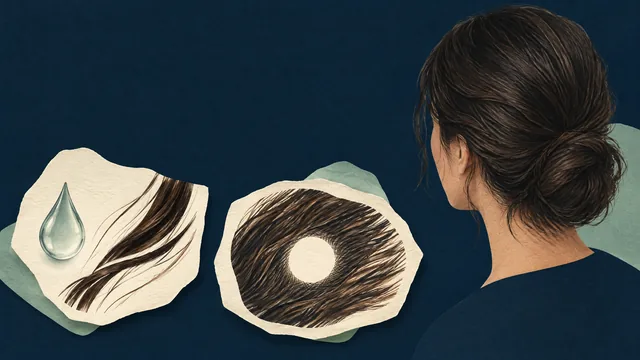
The old oiliness does not explain the new patch
Perhaps your fringe looks greasy by lunchtime, as it always has, but someone has now noticed an empty-looking area behind your ear. These observations have different histories. Tell a clinician when each began instead of presenting them as one condition called an oily scalp. The familiar symptom can otherwise distract from the change that needs investigating.
Seborrhoeic dermatitis is a recurring inflammatory skin condition that can affect the scalp and produce localised or diffuse scaling. It is not diagnosed from greasiness alone. Clinicians consider where the changes occur, their appearance and how they behave over time. A scalp can feel oily without that observation identifying the cause of a separate bald area. [S1]
DT Hair Growth has a seborrheic hair loss service page for enquiries about this concern. Use it to ask what assessment is available, not to conclude that oil has blocked your follicles. The service name does not establish why your patch appeared or whether cleansing is appropriate for it. [S4]
A patch needs examination, not a matching photograph
Alopecia areata often begins with sudden, smooth, round or oval hair loss. It can also affect a beard, eyebrows or eyelashes, and some people notice nail changes. Those are useful details to mention, but recognising a resemblance online is not the same as receiving a diagnosis. Itching does not settle the question either. [S2]
Other conditions can produce patches. Fungal scalp infection, called tinea capitis, may cause scaling and broken hairs, and it can affect adults as well as children. Some inflammatory forms can leave permanent loss. A patch that looks different from a typical online example still deserves assessment. [S5]
Before considering an alopecia areata treatment enquiry, have the new area assessed by a medical doctor or dermatologist. A dermatologist may examine the scalp and nails with magnification and review your health history. Selected cases need hair samples, a biopsy or blood tests; not everyone needs every test. Ask what remains uncertain and how it will be checked. [S3] [S6]
Choose the urgency before choosing a scalp service
A new, painless patch is a reason to arrange a medical appointment, not automatically an emergency. Explain whether it appeared suddenly or is enlarging when booking. Persistent itching or scaling also merits clinical advice, especially when hair loss has appeared alongside it. [S2] [S5]
Seek urgent medical assessment if the scalp is painful, hot and swollen, or if there is a tender swelling or pus. If significant skin symptoms come with confusion, faintness or rapid breathing, seek emergency care locally rather than waiting for a salon reply. These signs do not identify the illness, but they change the priority. [S5] [S7]
Avoid a scrub, massage or cosmetic treatment over symptomatic skin while it is being assessed. A suspected fungal scalp infection needs medical treatment; surface cleansing alone is not enough. If infection is a possibility, avoid sharing combs and hats and ask the clinician about contact precautions. [S5]
| What you have noticed | Next step | What should wait |
|---|---|---|
| Oiliness with recurring itch or scale, without a new patch | Seek clinical advice if symptoms persist or recur. [S1] | Assuming that a cleansing package treats the cause |
| A new bald area, even if smooth and painless | Arrange medical assessment and report its onset and changes. [S2] [S3] | Buying a regrowth course before the cause is assessed |
| Painful, hot, swollen skin, pus or a tender swelling | Seek urgent medical care. [S5] [S7] | Cosmetic scalp manipulation or treatment |
| Skin symptoms with confusion, faintness or rapid breathing | Seek emergency care locally. [S7] | Waiting for a beauty-service appointment |
Bring two short records, not one long theory
For the oiliness, describe your usual pattern: how soon roots feel greasy after washing, whether itching comes and goes, and when scale first appeared. Note recent shampoo or styling-product changes. For the patch, record the date it was first noticed, its location and any change in size. Say whether the discovery followed a haircut; that may explain when you saw it, not why it developed.
A few photographs in comparable light, with the same parting, can help show change. They cannot establish the diagnosis. Bring a list of medicines and supplements, relevant illnesses and any changes elsewhere, such as beard loss or altered nails. Do not stop prescribed medicine because you suspect a connection; discuss it with the prescriber. [S2] [S3] [S8]
The hair growth center hong kong enquiry route can help clarify who would assess you and whether scalp photography, a TCM consultation and cosmetic care are separate appointments. Ask about current conditions for the advertised scalp analysis and any consultation charges. An offer of analysis should not postpone medical examination of a new patch. [S9]
Put diagnosis ahead of complementary-treatment names
If you wish to explore tcm hair loss treatment, bring any medical findings and explain that the longstanding oiliness and new patch may be separate concerns. Ask how the TCM assessment would fit alongside your existing care. A constitutional assessment does not, by itself, replace checking for scalp infection or another cause of localised loss. [S8] [S10]
For an acupuncture for hair growth enquiry, ask why it is being proposed, what evidence relates to your diagnosed condition, how progress would be evaluated and what risks apply. A treatment listing is not proof of hair restoration. Evidence about acupuncture for other health problems cannot tell you whether it will regrow this patch. [S11] [S12]
Keep the medical doctor and TCM practitioner informed about medicines, herbal products and other treatments. Natural does not mean risk-free: herbal products can have safety problems, and improperly delivered acupuncture can cause infection or other harm. Do not replace prescribed treatment or delay conventional care to try a complementary course. [S8] [S12]
Return to cosmetic care with a narrower brief
After the patch has been assessed, ask the clinician whether cosmetic scalp care is suitable now and whether any products or manipulation should be avoided. Your appointment can then have a clear purpose, such as managing styling residue or enjoying a relaxing service, rather than being expected to diagnose or treat the hair loss.
A stylist may notice visible scale or a sparse area, but a salon observation or magnified image is not a clinical diagnosis. Keep comfort and appearance separate from the medical follow-up plan. Feeling cleaner after a wash does not show that the cause of a patch has resolved. [S1] [S3]
For a later DT Hair Growth enquiry, give the oily-scalp duration, patch discovery date and advice already received. Ask: should cosmetic care wait, who would conduct the assessment, and what would be charged separately? Confirm the actual Kwun Tong venue and appointment arrangements before travelling. A useful answer should clarify the next step, not require you to accept one explanation for both concerns. [S9]
Questions you may be asking
Does an oily scalp mean I caused the bald patch by not washing enough?
No. Greasiness alone does not identify the cause of localised loss, and seborrhoeic dermatitis is not simply a judgement about cleanliness. Describe your washing routine honestly, but have the patch assessed rather than blaming yourself or escalating cleansing. [S1] [S3]
Can a painless patch wait until my next routine haircut?
Arrange a medical appointment rather than leaving it solely for the haircut visit. Mention when it appeared and whether it is spreading. Pain is not required for alopecia areata to occur, and a stylist cannot determine the cause from appearance alone. [S2] [S3]
If flakes improve after shampooing, has that ruled out a separate hair-loss problem?
No. Improvement in scale does not establish why hairs are missing. Fungal scalp infection can resemble dandruff, and different conditions may need different investigations. Tell the clinician what improved and what did not; do not use that response as a diagnosis. [S1] [S5]
Can I rely on an English appointment because I found an English service link?
Confirm the consultation language before booking. DT Hair Growth’s English-language service links currently include substantial Chinese text. Ask whether your symptoms, medical records and proposed care can be discussed in English, and whether any preparation or appointment conditions apply. [S4] [S9] [S10]
What if small hairs appear in the patch before I am seen?
Keep the appointment and show the clinician the change. Hair can regrow spontaneously in alopecia areata, but its course varies. New hairs do not establish which condition you have or prove that a recent shampoo, supplement or treatment caused the change. [S3]
Sources & further reading
- [S1] DermNet: Seborrhoeic dermatitis
- [S2] American Academy of Dermatology: Alopecia areata signs and symptoms
- [S3] American Academy of Dermatology: Alopecia areata diagnosis and treatment
- [S4] DT Hair Growth: Seborrheic Hair Loss Treatment
- [S5] DermNet: Tinea capitis
- [S6] DT Hair Growth: Alopecia Areata Treatment
- [S7] NHS: Cellulitis
- [S8] NCCIH: Traditional Chinese Medicine — What You Need To Know
- [S9] DT Hair Growth: Hair-growth centre service overview
- [S10] DT Hair Growth: TCM Diagnosis for Hair Loss
- [S11] DT Hair Growth: Acupuncture for Hair Growth
- [S12] NCCIH: Acupuncture — Effectiveness and Safety