
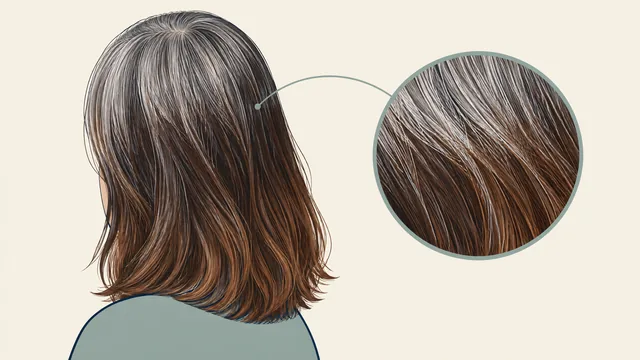
1. Describe the boundary you want to soften
Perhaps you like the silver appearing at your temples, yet the solid brown below it feels like a dividing line. Or you are comfortable with scattered grey but not a pale band across your usual parting. These are different starting points. Before choosing a service, identify whether the difficulty is the contrast in depth, the difference in tone or the way one solid section meets a mixed section.
Use two descriptions rather than one: how much natural grey you want visible, and how different the roots can look from the lengths. You might accept a clearly silver front while wanting less contrast at the back. You might prefer a mixed brown-and-grey appearance throughout rather than an all-over silver look. Neither preference requires every area to receive identical work.
Vit So's grey blending service information is useful for framing a request to retain some white strands while discussing the depth around them. [S1] Treat that as an appearance goal to assess, not a standard recipe. A photograph of silver hair is a reference for what you like; it is not evidence that your current dyed lengths can match it at the next visit.
2. Map how much old colour is still there
Take one photograph showing roots and ends together, then closer views of the parting and both temples. Use soft daylight and your normal hairstyle. If you regularly tie your hair up, add that view: the visible boundary may be quite different from the one you see with hair hanging loose. Keep current photographs separate from your preferred references.
On a simple sketch, mark untouched new growth, previously coloured mid-lengths and ends. Note any darker bands, lighter pieces or areas whose history differs. Do not label every dark strip near the scalp as new growth; an older colour band may sit close to it. The root-and-length comparison highlights why locating the requested change matters before deciding on the application area. [S3]
Keep the history attached to the hair
List the products and chemical services applied to the hair you still have, including home dye and earlier lightening. Approximate dates are more useful than a guessed exact date. Bring packaging photographs where available. Then write your length limit: for example, keeping enough hair to tie back, or accepting a shorter outline later. This makes the amount of old colour you are willing to keep a practical decision rather than an afterthought.
3. Choose a transition route, not just today's finish
There are two separate goals here: enjoying a softer mixed colour indefinitely, and eventually wearing your natural grey without continuing to cover it. A blended design can serve the first goal without automatically completing the second. If your aim is to stop colouring, say so before agreeing to work that introduces a new shade you would then want maintained.
The grey blending vs full coverage comparison helps you weigh visible silver against a more consistent colour, including how each might meet new growth. [S2] Full coverage can be a deliberate pause if you are not ready to show grey yet, but continuing to darken the roots maintains a coloured boundary for a later grow-out. Blending allows variation; it does not mean the old dark section disappears.
Use the table to name your direction before discussing methods. The right question is not which option sounds most natural, but which intermediate appearance supports your longer-term intention.
| Route | What you accept now | Decision still to make |
|---|---|---|
| Leave new growth uncoloured | A visible grey-to-dyed boundary | Whether to retain, adjust or gradually trim the old lengths |
| Blend towards a mixed finish | Visible silver and some light-dark variation | Which areas change, and whether their tone or placement will need upkeep |
| Continue fuller coverage for now | A more consistent coloured appearance | When to stop covering new growth and reconsider the boundary |
4. Agree where future colour work should stop
A transition appointment needs an area-by-area agreement. Ask the stylist to distinguish the new growth, the old dividing line and the lengths below it. If keeping your emerging grey is the priority, clarify whether the proposed work would colour those strands or leave them untouched. A root-only service may maintain an existing shade rather than advance your grow-out.
Reading root touch up vs full head colour can help you separate new-growth work from a requested change through previously coloured lengths. [S3] Neither name alone tells you whether the plan fits a move towards natural grey. A wider scope also does not mean the same product or change is needed from scalp to ends.
Discuss three possible boundaries of work: leave the grey roots alone, consider an adjustment to selected old-colour areas, and preserve lengths you still like. Ask what each area would look like beside the others if nothing more were done. If reaching your preferred lightness calls for processing the old lengths, let their condition and colour history inform feasibility. A smaller adjustment, a later trim or postponing further colour may better match your priorities.
5. Judge each stage by the same everyday view
Instead of asking for a universal completion date, agree what the next stage is meant to achieve. It might leave the front silver untouched while reducing how solid the adjacent dyed section looks. Another stage might simply give you time to see more natural growth before deciding whether to alter the lengths. Progress can include choosing not to add colour.
Keep a photograph of the agreed finish in ordinary daylight, with the same parting used in your starting pictures. At a later review, identify what has changed: the position of the boundary, the tone of a coloured section or the balance of lighter pieces. These observations point to different decisions. A change you dislike through the lengths does not automatically call for covering the grey roots again.
Set an acceptable stopping point as well as a preferred destination. Could you wear a noticeable boundary if the length stayed intact? Would a warmer mixed section bother you more than a silver parting? The comparison notes that blending can still involve attention to regrowth, placement and changing tone. [S2] Let these specific concerns guide a review rather than assuming every stage needs another full-head application.
6. Bring a brief that protects the grow-out goal
Put your current photographs, colour history and length limit together with one preferred reference and one rejected reference. Explain the difference: perhaps one is too streaky, too pale overall or too dark at the front. Add how you normally wear your hair and whether you are aiming to end colour work or keep a mixed coloured finish.
A useful enquiry could read: 'I want to move towards my natural grey and keep my current tie-back length. I am comfortable showing silver at the temples, but the dark band below the parting feels too abrupt. Please assess whether we can leave the new growth uncoloured and make a limited change to the old colour. I would like to understand the appearance between stages before choosing more work.'
Ask for the proposed scope in plain language: areas left untouched, areas adjusted, any lightening or tone work, and any separate cut, care or finish. Confirm which items the quote includes rather than treating a general colour entry as a transition package. [S1] Before agreeing, ask one final question: 'If I decide not to colour again after this stage, what boundary would I be choosing to grow out?' That keeps the next appointment connected to the grey you actually want to keep.
Questions you may be asking
Can I begin growing out grey while keeping long dyed hair?
You can make keeping length part of your brief. It means discussing how much old colour you are willing to wear beside the new growth, rather than assuming the lengths must match immediately. Ask about leaving them alone, adjusting selected areas or trimming them gradually within your agreed length limit.
Will a blended appointment remove my existing dark band?
Not necessarily. A mixed finish at the roots and a solid dark section below can still look distinct. Show the band with roots and ends in the same photograph, then ask whether it would be left, adjusted or addressed at a later stage.
Does retaining natural grey mean asking for an all-over silver colour?
No. Keeping your own grey is different from creating a uniform fashion shade across previously dyed hair. Explain which natural strands you want preserved and which features of a silver reference you like, such as its visible front streak or overall lightness.
What if I want fuller coverage once more before starting?
That can be a conscious pause. Ask what will be coloured and how it will meet the lengths. Keep the eventual grow-out goal in the discussion, because covering the new grey again leaves another coloured section to consider when you stop.
How do I avoid restarting root coverage at a later review?
State that keeping new grey uncoloured remains your priority. Bring comparable photographs and identify the actual concern, such as tone on the lengths or the old boundary. Ask whether that concern can be addressed separately before agreeing to colour the roots.