
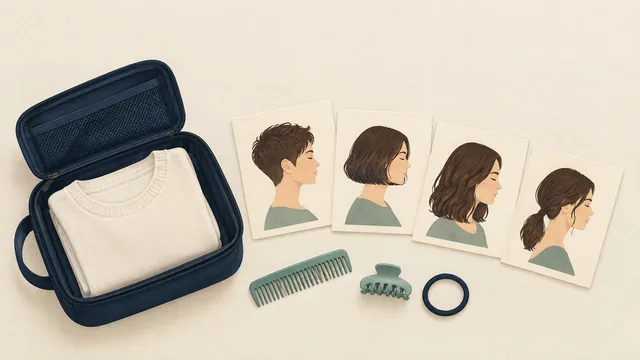
Start with the bag, not the shortest photograph
Put your usual hair tools on a table beside your weekend bag. Separate what creates your everyday shape from what adds an occasional finish. If you normally use a dryer and brush to turn every end inward, leaving them behind changes the routine even if the cut is shorter. If you already enjoy your hair’s natural bends, your packing needs may be quite different.
Choose a realistic travel routine first. That might mean air-drying and tucking the sides, finger-drying with a dryer you have confirmed is available, or bringing one familiar styling tool. Do not build the plan around an assumed hotel appliance. Check the accommodation details if using its dryer is essential to the look you want.
Then name the finish you can accept: a precise edge, loose movement or a front that stays clear without much shaping. A cut that needs a tool you resent packing is not a lighter routine, even when it occupies less space around your shoulders.
Compare four lengths by what they ask you to bring
Use haircut names to narrow the conversation, then compare the actual dry lengths. The useful difference is not simply short versus long: it is whether you will manage the hair by shaping it, tucking it or gathering it away. Those options overlap, and the shortest front pieces can change the answer.
A bob: decide whether tucking is enough
When considering a bob haircut, compare the dry edge beside your jaw with the side length you need for ear-tucking. A shoulder-clearing outline can be appealing in a small travel wardrobe, but losing a full tie may mean bringing clips instead. Check whether you like the edge with its ordinary bends, rather than only after a rounded blow-dry. [S1]
A pixie: plan a front-and-crown reset
For a pixie cut, ask which front and crown sections need direction after sleeping and which can settle with your usual routine. A close outline removes the familiar ponytail option, while retained top length may still need attention. Decide whether you will bring a comb or familiar finishing product, and whether you are comfortable with more of the ear and neckline showing. [S2]
| Length reference | Packing decision | Check before choosing |
|---|---|---|
| Pixie | A small front-and-crown kit instead of a ponytail kit | Can you repeat the reset with the tools you will bring? |
| Bob above the shoulders | Clips if ear-tucking is not enough | Do the shortest side pieces stay where you want them? |
| Lob near the shoulders or collarbone | Your usual tie, plus any needed clips | Does your own tie position gather the front and nape? |
| Medium shoulder-to-collarbone length | Tie-back accessories versus tools for the loose finish | Are you happy with the ends against your travel clothes? |
Protect the tie-back option you actually use
Think through breakfast, a windy walk and getting ready for dinner. If your first response to untidy hair is a ponytail, that is part of your travel routine, not a minor preference. A half-up arrangement might keep some front hair away, but it leaves the lower lengths loose; decide whether that solves your actual problem.
A lob haircut is worth comparing when you want a shorter loose outline but still hope to gather your hair at the nape. The label alone does not establish tie-back ability: front length, shorter layers and the position of your tie all matter. [S1]
Take your normal accessory to the consultation and demonstrate the arrangement yourself. Explain whether loose pieces are welcome, tolerable with one clip or something you want to avoid. If a cut would require several extra pins to reproduce your usual tie, retaining useful length may suit the light-packing goal better. Do not assess this only from the longest ends at the back.
Choose shoulder contact according to your touch-up tolerance
The shoulder area deserves its own decision. Compare an edge that clears your shoulders with one that rests on them or reaches towards the collarbone. Ends near the shoulders may turn as they meet your body or clothing, and the two sides need not settle identically. Your dry landing point matters more than the length seen on someone else’s neck. [S3]
Use the guide to medium length haircuts for women to compare shoulder and collarbone placement alongside the front pieces you need to retain. More length can preserve useful options, but it does not automatically remove the need to shape the ends. [S3]
Wear a top similar to what you will pack and look at the hair both forward and behind your shoulders. If a casual outward bend is fine for sightseeing, you may not need to correct it. If you want a consistently inward edge for every photo, include the styling step in your plan before deciding that this length will travel easily.
Rehearse a travel morning before changing the length
Try your proposed packing limit at home with your current hair. Use only the accessories and tools you intend to bring, then notice which step you miss. This cannot show exactly how a new cut will behave, but it can reveal that you rely on a brush, a full tie or deliberate fringe styling more than you thought.
Take two ordinary photographs: one after your normal drying routine and one before you would usually touch it up later in the day. Note what prompted the reset. Was the front in your eyes, the crown flattened, or the ends no longer arranged as neatly as you prefer? A specific observation gives the stylist something useful to discuss.
Separate a quick practical reset from a complete restyle. Moving a parting or using a clip may be enough for an afternoon outing; recreating a polished reference could require more equipment. If you will not do that work on holiday, ask about an everyday version of the outline rather than treating the styled photograph as the only acceptable result.
Take a packing-led brief to the appointment
Bring one reference for the length and one photograph of your own ordinary finish. Lead with the travel constraint, then the feature you must keep. A clear brief might be: ‘I’m considering a shorter outline for weekends away. I’ll bring my usual comb and one clip, but no styling iron. I need the front clear for walking, and I want to see whether ear-tucking can replace my low ponytail.’
Ask which dry lengths support that routine and what you would give up by going shorter. Request an explanation of any required drying direction or product step, then describe it back in your own words. Clarify the booked work, included finish and charges before agreeing; a named style does not tell you everything an appointment includes.
If departure is approaching, leave room to practise the proposed routine rather than relying on the salon finish for the whole trip. The decision is complete when you understand both the loose shape and your practical fallback. You can then pack for a routine you have chosen, not add equipment to rescue a length you have not learned to wear.
Questions you may be asking
Which length should I consider if I want to leave my styling iron at home?
Start with the shape you like after your usual non-iron drying routine. Bring that photograph to the consultation and compare each proposed length against it. A bob, pixie or longer outline can still need directed styling; choose an everyday finish you are willing to wear rather than relying on the name.
Will a lob fit into the same ponytail I use with long hair?
Not necessarily. Demonstrate your usual tie height and identify the front and nape pieces that must reach it. A low tie and a higher ponytail ask different sections to travel different distances. Decide whether clips or loose pieces are acceptable before shortening those areas.
Should I bring a travel dryer or use the hotel’s one?
Check what the accommodation provides if a dryer is central to your routine. Availability alone does not tell you whether its attachments suit your usual styling method. If you do not want to bring your own, explain that constraint when discussing the cut and practise a simpler routine at home.
Can clips make a shorter bob as practical as tied-back hair?
They may meet some needs, such as keeping side pieces clear during breakfast, but test the arrangement you actually want. Clips that leave the nape loose do not recreate a full ponytail. Consider whether you are happy carrying and repositioning them during the day.
Is the day before departure a good time for a major change?
Consider whether you will have an ordinary wash and a chance to practise before leaving. If not, you may prefer a smaller change now or a later appointment for the new outline. The important preparation is understanding the routine; a polished departure-day finish does not teach you how to reset it.