
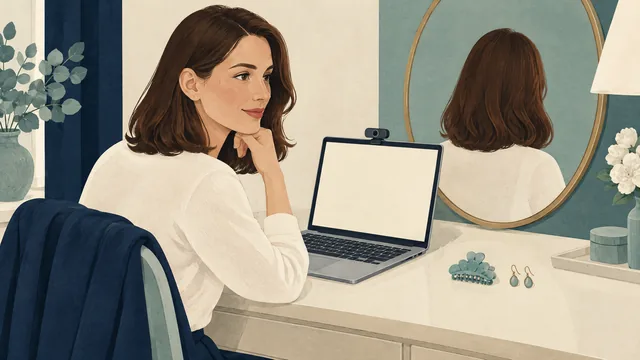
Write two briefs, then find the shared outline
For the recording, write one sentence about how you want to look: recognisable, with your usual parting and no front pieces falling across your eyes. For the evening, write another: perhaps a clearer neckline, an exposed ear for earrings or more movement through the ends. These are visible goals, not instructions to book two named services.
Underline anything shared between the sentences. If both call for a side part and a tidy front, keep those as the base. Then circle the real difference. Changing a decorative clip is a smaller request than moving from loose hair to a fully gathered structure, but either needs to be considered with your current length and layers.
Choose a priority if the requests compete. If the headshot will represent you professionally for months, you may prefer familiar hair on camera and a restrained evening variation. If the evening has a strict costume requirement, explain that early rather than trying to retrofit it after recording.
Check the camera view before choosing extra volume
Use the camera and approximate framing planned for the recording. Take a short test clip with your hair as you normally wear it, then watch yourself speak and turn slightly. Note where the front falls, whether the crown is cropped by the frame and whether one side obscures your face. The point is to spot a practical outline issue, not to judge yourself from every frozen expression.
Make the request specific: keep the forehead partly visible, direct the front away from the glasses or retain a soft bend beside the jaw. Avoid asking for more volume everywhere when only the crown needs attention. Bring a still from the test and a current side-view photograph so the stylist can see the difference between the camera concern and your actual hair.
If headphones, glasses or an earpiece are required, test them too. Put them on and remove them as you will during filming. A tucked side that works without equipment might need a different arrangement once the recording setup is in place.
Compare the work, not just the service label
Separate washing needs from the shape you want. You might need a clean starting point and a finished dry outline, or you might already have suitable dry hair but want selected sections gathered. Neither starting condition tells you, on its own, what the appointment includes.
If you want to keep the cut and mainly refresh the loose outline, use Vit So's wash and blow dry page to frame an enquiry that explicitly excludes cutting and describes the desired parting and end shape. Its service guidance distinguishes washing and drying from cutting, with extra shaping or pinned details requiring clarification. [S1]
A reference containing curls, a half-up fastening and a decorative comb is not simply a picture of dry hair. Identify those elements separately so the proposed work and quotation can be matched to your request.
| Your actual need | Work to discuss | Question before confirmation |
|---|---|---|
| Refresh an existing cut for both occasions | Washing, drying and a defined loose finish | Does the proposed finish fit the quoted scope? |
| Change movement or gather selected sections | Additional shaping, fastening or accessory placement | What preparation and separate steps are needed? |
| Accommodate an evening outfit and activity | An occasion-specific outline and placement | Can this work with the earlier camera brief? |
| Return for a substantially different evening shape | A possible second appointment | Is it available, and how would the work be quoted? |
Choose a transition you can actually manage
There are three useful plans: keep the same finish throughout, make a small agreed adjustment yourself, or enquire about a later professional change. Treat the third as an option to check, not the default. A second visit adds another journey and depends on confirmed availability; it may not fit the gap between filming, work and changing clothes.
Vit So's hair styling guidance can help you describe whether that transition means retaining loose movement, gathering part of the hair or changing the overall outline. It also recommends clarifying which fastenings should remain untouched and which adjustments suit the finished structure. [S2]
If a clip is intended only for the evening, ask whether you can add it without changing the support underneath. Do not assume removing pins will produce attractive loose waves, or that gathering a finished blow-dry will be straightforward. Choose a change you have understood and can practise, rather than packing unfamiliar tools for a hurried reset.
Add the evening details without starting from scratch
Bring the evening outfit's neckline and back view alongside the camera brief. Explain whether you will be seated, speaking, dancing or walking between locations. A low gathering might meet a raised collar; loose ends may sit across a shoulder detail. Use those observations to refine the shared outline rather than selecting a completely different hairstyle because the invitation says formal.
For the occasion-specific part of your enquiry, Vit So's event hair styling page helps organise outfit, accessory and departure-time details, while keeping makeup and venue arrangements separate from the hair appointment. [S3]
Check how you will change clothes after recording. A narrow neckline pulled over the head could disturb a pinned shape. Include any necessary travel headwear in the plan, and allow for the actual route between stops. Ask which feature to preserve if the finish changes during the day: a clear face, the parting or the gathered outline.
Send one enquiry with both deadlines
Give the salon the recording deadline and the evening departure deadline together. Include travel, changing and any earlier photographs in your own timetable. Ask for an estimate based on the proposed work before committing to a narrow gap; the event start time alone does not show when you need to be ready.
Information to send
Include the date, current front and side photographs, hair length and shortest layers, relevant processing history, existing products and any extensions already fitted. Attach one camera reference and one evening reference, identifying the detail you want from each. State whether cutting is wanted and which look takes priority.
Questions the reply should answer
Ask whether one finish can serve both briefs; whether washing, drying, extra shaping and accessory placement are included; what arrival preparation is needed; and what the assessed work costs. If a return visit is suggested, confirm its availability and separate scope. Check that the reply addresses your required departure time, not just an appointment start time.
A message you can adapt
“I have a video headshot recording and an evening event on [date]. I need to leave by [time] for recording; my evening departure is [time]. I want my usual parting and a clear face on camera, then [one evening change]. My hair is [length/layers], and I do not want cutting. Could one appointment suit both? Please advise preparation, included work, a quote and availability.”
Send hairstyle questions through Vit So's own enquiry channel. Once the scope and appointment are confirmed, keep the agreed priority and transition instructions with your outfit notes so you are not making a new hair decision between stops.
Questions you may be asking
Does having two occasions mean I should book two services?
No. Two occasions describe the day, not the work required. Share both briefs and ask whether a single finish can accommodate them. If they require substantially different structures, discuss the options and availability before deciding on a return visit.
Should I wash my hair again between the recording and dinner?
Do not build a second wash into the plan automatically. It would mean starting the drying and finishing process again. Tell the salon about the proposed evening change and ask what preparation it needs, including what to do if the earlier finish no longer suits the plan.
What if my headphones flatten the sides during filming?
Show the recording equipment in your camera test and mention the issue before styling. Ask for a front and side arrangement compatible with wearing it, then clarify a simple adjustment for after removal. Do not plan to dismantle supporting pins without instructions.
Can I rely on returning to the salon if filming overruns?
Only a confirmed arrangement establishes a return appointment, and a delay may affect it. Explain the uncertainty when enquiring, ask what happens if your schedule changes and choose an evening fallback you can manage without assuming a later opening.
What should I send if I have not chosen my evening outfit?
Send the likely neckline, essential earrings or headwear, and the expected activity. Mark the outfit as undecided. If it changes the proposed hair placement, send updated front and back views before the appointment so the two briefs can be reconsidered together.