
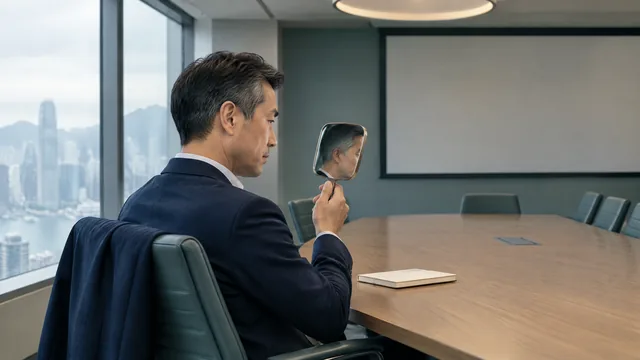
Describe the haircut you recognise as yours
Choose a reference photograph from a period whose haircut you still like. It need not show your fullest hair. A familiar short side part may be more useful than a much older photograph with a different texture or length. Add a current front and side view so the shop can distinguish your preferred style from the hair available to work with now.
When enquiring about a hair system, describe the intended haircut before selecting a construction label. The term does not specify a piece's material, base or attachment. OWNSTRAND's guide supports starting with coverage and appearance, then confirming the particular option's wearing details. [S1] Write, for example, 'I want a short side part with a flat outline above the ears,' rather than just 'make it natural'.
Mark the photograph with a few preferences: where the part sits, whether the forehead stays partly covered, and how much height you like at the front. Separate these from the area needing coverage. That gives the shop a style request without asking it to reproduce every detail of a photograph.
Choose your degree of change before choosing fullness
A gradual appearance choice can preserve the usual outline while changing the impression of fullness. A bolder choice might introduce more height or a different part. Neither is inherently more suitable for client meetings. Choose according to what you want to see in the mirror, rather than an assumption that work requires maximum density or a younger-looking hairline.
Use the table to identify your boundaries. These are preferences to discuss, not product packages. If you want several changes, rank them so a sample that gets the shape right but misses the colour does not become an accidental compromise.
| Style decision | Closer to the familiar look | More visible change | Question to resolve |
|---|---|---|---|
| Front outline | Keep the usual fringe direction | Explore a lifted or more open front | What can this option be styled to show? |
| Top volume | Retain a relatively flat silhouette | Request a fuller outline | Can we compare the shape from the side? |
| Part position | Keep the existing direction | Try a different part | Is that position possible on this piece? |
| Colour impression | Retain familiar grey and tones | Discuss a different colour direction | Which samples can be reviewed together? |
| Daily styling | Repeat the usual simple finish | Accept more styling work | What routine does this exact piece require? |
Judge the seated side profile, not only the front
A client may see you across a table while you turn towards a screen or another person. Ask to review the proposed shape seated, with your normal glasses and work collar if relevant. A flattering front view alone does not answer whether the top looks too high or the outline above the ears feels unlike your usual cut.
Look at the relationship between the front height and the sides. Is the shape balanced in the way you prefer? If surrounding hair is retained, ask how its cut would relate to the selected piece. Keep this as a joint styling question; deciding exact coverage dimensions needs assessment rather than guesswork from a photograph.
If something looks wrong, name the location and direction: 'The volume above my right ear feels too wide' is more actionable than 'It doesn't look like me'. Ask what could be changed before authorising cutting, and which concerns would require a different option rather than a trim.
Separate meeting-room lighting from camera evidence
A photograph can help communicate shape without being an exact colour reference. Nikon explains that different light sources create colour casts and camera white-balance choices can reduce or preserve them. [S3] A warmer office photograph and a daylight photograph may therefore tell different colour stories. Avoid asking the shop to match a heavily filtered image.
Describe the room you normally work in: ceiling lighting, a window beside the meeting table, or a darker presentation setting. Ask what lighting is available for comparing the sample's colour and finish with your own hair. If practical, review it in ordinary daylight as well as indoor light; the men's guide recommends suitable lighting rather than relying on a catalogue image. [S1]
Look at overall sheen and outline before zooming in on a phone image. If video calls also matter, ask whether you can check the proposed style on your usual camera. Treat that as a separate work-view check, not proof of how everyone will see it in person.
Make the preferred look workable on a meeting morning
Write down how much preparation you are prepared to do before leaving home. If your old haircut needed only a quick comb-through, say whether you want to keep that habit. A styled sample shows a shape; it does not establish that you can repeat the finish with your current tools or available time.
Ask about washing, storage and approved styling methods for the exact piece. Explain whether you want to remove it at night, but leave attachment and any fitting support as questions to confirm. [S1] Plan time before an important meeting to learn the agreed routine and discuss any unresolved shape concerns. That is preparation, not a promise of confidence on a deadline.
A short brief you can adapt
'I am returning to regular client meetings. I want to keep my short side part and grey at the sides. I would like a little more fullness on top, but not a tall front. Please help me compare the seated side profile and the finish under indoor light. I need to understand the daily routine before deciding.' Replace those preferences with your own; the example is a wording aid, not a customer account.
Take the unanswered points to a focused shop enquiry
Use OWNSTRAND's wig shop Hong Kong information to ask whether your style brief can be discussed and what relevant samples can be viewed. Its only confirmed physical shop is Unit 2103, 50 Hoi Yuen Road, Kwun Tong, Hong Kong (利寶時中心). Arrange the visit before travelling, and establish which measurement, cutting or fitting steps apply to your particular men's enquiry. [S2]
Finish with questions the shop can answer: Which option could support this part and side outline? What can be changed, and what cannot? Can the colour and finish be reviewed under suitable light? What does the quote include, and what wearing support is available? Ask when supply and any later adjustment can be confirmed. Those answers let you choose a familiar or bolder style deliberately, rather than accepting a transformation you never requested.
Questions you may be asking
Should I bring an old staff portrait?
Yes, if you still like its haircut. Explain which features to retain, and add current photographs. A polished portrait may help with shape but is less useful for judging exact colour.
Can I ask for fuller hair without changing my whole style?
Yes. Describe the outline and part you want to keep, then identify where you would like added fullness. Ask which options can meet that combination rather than choosing by density alone.
Must I tell clients why my hair looks different?
That is your choice. You can keep the conversation on work or simply say you have changed your hairstyle. Do not base the purchase on an assurance that nobody will notice.
What if the sample suits me only when it is carefully styled?
Ask what was used to create that finish and whether the routine is manageable for you. If it exceeds your preferred preparation time, discuss a simpler shape before deciding.
Can I assume the shop will cut my existing hair too?
No. Explain that blending with retained hair is part of your goal and ask what cutting is offered, by whom and within which quote. Confirm that scope before arranging the visit.