
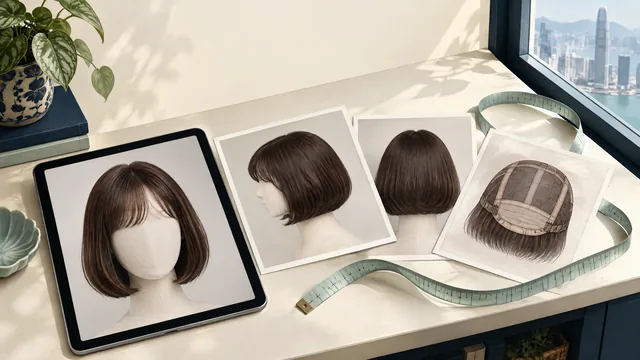
1. Give every photograph an exact item reference
Save the listing name, manufacturer, model reference, selected colour code and cap size together. Include the page address and the date you saved it. A screenshot cropped to the hairstyle loses information: it may no longer show which colour was pictured or whether another option was selected. Ask whether the photograph shows the chosen variant, another shade, or simply the model’s general silhouette.
The buy wigs online Hong Kong catalogue at OWNSTRAND is a useful starting point for this record. Its stated status is enquiry for a quotation and confirmation of availability. A catalogue entry therefore gives you something specific to discuss; it does not establish that the pictured colour and size are waiting to be dispatched. [S1]
If the shop suggests an alternative, give it a separate record. Do not carry across the original item’s dimensions or cap description merely because the two styles look similar.
2. Request the angles that change your decision
Ask for both side views and a back view of the same style, ideally in the same photographic set. The sides reveal volume around the ears, the direction of layers and how far a fringe extends. The back shows the nape outline, the longest lengths and whether the shape is tapered or fuller. These are different questions from whether the front looks attractive.
For shoulder-length or longer styles, ask to see the ends unobstructed by clothing. For a short style, request a view with the ear and nape visible. If you plan to change the part or sweep hair away from the face, a close view of that intended arrangement is more useful than another straight-on portrait.
Ask whether supplied images are manufacturer references or photographs of an item the shop can inspect. A reference set may clarify shape without proving local stock. For colour, request the written shade description alongside photographs; OWNSTRAND notes that screen colour varies between devices. [S1]
3. See inside the cap, not just the finished hairstyle
Request a clear inside-cap photograph and the written construction specification for the selected model. Ask the seller to identify the front edge, top area, sides, nape and any adjustment or fastening components. A close-up of one attractive area should not stand in for evidence of the whole cap.
Describe the action you want to perform: wear an exposed forehead, keep a fixed side part, move the part, or remove the piece each evening. Then ask which part of this cap supports that preference and what limitations apply. A construction name is a starting point for the question, not permission to assume every section has the same structure.
Keep the material specification and care instructions with the cap evidence. Neither gloss in a photograph nor a product category establishes permitted styling tools. OWNSTRAND’s shop guidance recommends checking the stated fibre, construction and fit details for the actual option. [S1] Photographs can clarify visible components, but pressure, edge feel and ease of adjustment may still need a fitting.
4. Ask what each dimension actually measures
Separate head-fit measurements from hair length. For a full wig, request the model’s size chart and measurement diagram rather than relying on an ‘average’ label. Jon Renau’s sizing guide, for example, uses circumference, ear-to-ear and front-to-back measurements. That illustrates why a single number is not a complete description; use the guidance relevant to the manufacturer and model under discussion. [S3]
For listed hair length, ask where the measurement starts and ends, and whether different zones have separate figures. A fringe measurement and a nape measurement describe different parts of the shape. For waves or curls, establish whether the stated length is measured as styled or with the hair extended before comparing two listings.
For a topper, ask for base length and width, units and a diagram showing orientation. Base dimensions describe coverage, not the length of the hair hanging beyond it. If the seller cannot explain a measurement, keep it marked as unresolved rather than using it to predict fit.
5. Connect the quotation to the exact item and terms
Before agreeing to proceed, request a written quotation identifying the model, colour, size and any confirmed cutting or fitting inclusions. Ask whether the option is ready to supply, needs sourcing, or involves custom work, and separate preparation time from delivery time. OWNSTRAND’s website supports browsing and enquiries rather than payment checkout; sending an enquiry does not place an order. [S2]
The Hong Kong Consumer Council advises checking return policies in advance and keeping product information and transaction records. Its guidance also highlights differences in return procedures, costs and refund methods. [S4] Do not borrow a policy from another retailer or assume that an overseas manufacturer’s terms govern a local purchase.
| Point to confirm | Useful item-specific question |
|---|---|
| Supply | Can you supply this model in this colour and size, and what is the next step? |
| Total quote | Which services and delivery charges, if any, are included or additional? |
| Delivery | What destination, dispatch timing and delivery arrangements apply to this item? |
| Returns or exchanges | Is any return or exchange policy offered for this item, and where are its conditions recorded? |
| Conditions and procedure | If a policy applies, what deadlines, inspection restrictions and costs should I understand? |
| Problems on receipt | Who should I contact if the item arrives damaged or differs from the agreed specification? |
6. Let the missing evidence decide your next step
A missing back view is a reason to request that view. An unexplained dimension needs a diagram or clarification. An unanswered supply question means the candidate is still unconfirmed. Missing return information is not evidence that returns exist—or that every type of complaint will be handled in the same way.
If the unresolved issue is physical fit or cap feel, use OWNSTRAND’s wig shop Hong Kong guide to move from browsing to a specific enquiry. Its only confirmed physical shop is in Kwun Tong. Ask whether the relevant item or an identified sample can be viewed and whether fitting arrangements are available before making the journey. [S2]
Keep the final message focused: ‘For this model, colour and size, can you provide side, back and inside-cap views, explain the measurements, and confirm supply and the applicable buying terms? If fit remains uncertain, what exactly could I assess in person?’ Those answers let you choose between proceeding, arranging a viewing or keeping the item on hold.
Questions you may be asking
Does a large catalogue mean the listed wigs are in stock?
No. A catalogue can show styles available for enquiry. Obtain confirmation for the exact model, colour and size, not just the product family. OWNSTRAND explicitly asks shoppers to confirm availability. [S1]
Is a video better evidence than photographs?
It can show movement and several angles, but ask which model and variant it depicts. A video still does not establish dimensions, current supply or transaction terms.
Can one inside-cap photograph confirm how the wig will feel?
It helps you identify visible construction and adjustment components. It cannot reproduce pressure or contact on your head. If those decide the purchase, ask about a fitting for the relevant option.
Should I assume I can try the wig and return it?
No. Ask whether any policy applies and what inspection or trial conditions it permits. Clarify this before wearing, washing, cutting or otherwise altering the piece; do not invent your own trial period.
What should I save after the shop replies?
Keep the dated listing, variant details, supplied images, measurement explanation, written quotation and agreed terms together. Save later changes too, so the original style reference is not mistaken for the final specification. [S4]