
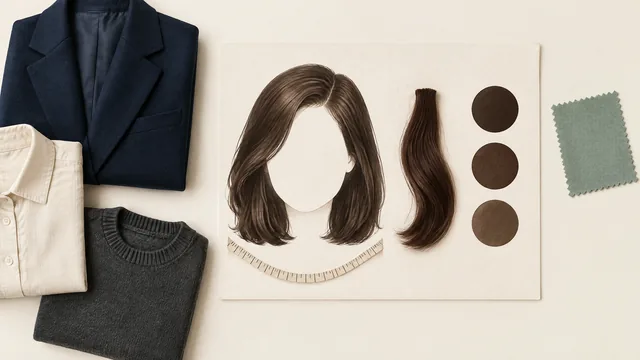
1. Let three real work outfits set the direction
Choose three outfits you expect to repeat: perhaps a navy jacket and cream shirt, a charcoal knit, and a patterned blouse. Photograph yourself wearing them with your usual parting. Look at the whole frame rather than just your hair. Do you want the hair to remain a quiet background, appear more consistent beside simpler clothes, or become the one noticeable colour element? These are preferences, not rules about which shade belongs in an office.
Pick one leading intention, such as ‘keep the overall depth familiar, but move towards a more neutral brown’. That is more useful than simultaneously requesting lighter ends, warmer reflections and a completely different outline. Vit So’s hair colour guide separates depth, tone and coverage, which helps turn a wardrobe preference into a specific salon discussion. [S1]
Make a short keep/change note: keep the darkness you like with your jacket; change the reflection you dislike beside your shirts. Use outfit photographs to explain your taste, not to predict the achievable shade. There is no need to collect a different colour reference for every garment.
2. Give the cut a supporting job
Before adding cutting to the plan, identify a problem it would solve. You might want the ends to sit more clearly above a shirt collar, less width around a structured jacket, or face-framing hair that stays out of the way during presentations. Alternatively, your existing outline may already work: the wardrobe change alone does not create a cutting need.
Describe the boundary as well as the change. ‘Keep enough length for my normal low ponytail, but tidy the outline when it is down’ is clearer than ‘make it smarter’. Mention the tools and products you actually use before work. A shape that relies on a finish you never recreate is a separate commitment from the colour choice.
If you want to remove a substantial amount of length, show that proposed length during the colour discussion. Ask how the final cut affects the colour areas being planned and what service order the stylist recommends. Agree both goals together, rather than paying for an overall colour change and only then deciding which lengths to keep.
3. Translate ‘tinting’ into the areas you want changed
An overall colour direction does not mean every part of your hair begins in the same state. New roots, older dyed lengths and lightened ends should be identified separately. Bring clear photographs of each, plus approximate dates and areas of previous salon or home colour, bleaching, perming or straightening. If you cannot recall a product, say so rather than filling in the gap.
When discussing hair tinting, ask what is proposed for your roots, mid-lengths and ends; ‘full head’ describes coverage, not identical handling of every area. [S1] If the lengths already fit your wardrobe goal, ask whether they need changing. If an old colour band is the concern, point to it rather than assuming a routine tint will address it.
Keep the brief visual: a reasonably consistent overall shade, or deliberately separate lighter pieces? Those are different requests. Ask which approach fits your preferred direction and current hair. A colour name on a mood board is not enough to establish whether the work is a straightforward tint or a broader colour plan.
4. Read the combination as named work, not a saving
Vit So’s published menu lists a women’s wash, cut and blow-dry combination with general colour and pre-service hair protection. It also lists standalone tinting and other colour services separately. That distinction matters: the named combination is not an invitation to substitute any colour design or care service. [S2]
Use the haircut and colour package listing to ask whether its named work fits your cutting brief and colour direction, and which published option applies to you. The fact that services are grouped does not, by itself, establish a discount. If that listed combination does not match your booking, request a quote for the work you actually need.
Ask what ‘general colour’ covers in your case and what the protection step involves. Clarify the washing and finishing arrangements, too. If lightening, toning or corrective work is proposed, ask whether it is included or separately charged; do not transfer inclusions from a different package. For longer hair, check whether the menu’s length addition applies. Record the agreed scope and total before confirming. [S2]
| Quote item | Your goal | Question to settle |
|---|---|---|
| Cut | A clearer outline with work clothes | What length and shape changes are agreed? |
| Colour | One coherent direction | Which areas change, and which stay as they are? |
| Protection | Understand the named care step | What is used, and is it part of this quote? |
| Finish | See the look with your normal parting | What washing, drying and styling are included? |
| Additional work | Keep the total within your ceiling | Which assessed steps and length additions cost extra? |
5. Test whether the second change earns its place
Set a total ceiling for this update, then rank the two changes. If the main issue is a shape that clashes with how you wear your new collars, cutting may come first. If you like the cut but dislike the existing colour beside your clothes, colour may be the priority. Neither requires the other simply because a combination appears on the menu.
Compare two proposals with clear scopes: your priority service alone, and the assessed cut-and-colour plan. Ask what the extra work contributes to your stated goal. A lower total that leaves the main concern unresolved is not a useful comparison; neither is a larger plan containing changes you do not want.
Before approving the colour, ask what keeping that direction is likely to involve later. Use the answer to decide whether this update suits your habits, rather than choosing the first appointment in isolation. You can also keep the current colour and revisit it after living with the new clothes. A wardrobe update is not a deadline to reinvent everything.
6. Prepare the Sheung Wan visit around the agreed brief
For a neighbourhood visit, Vit So’s hair colour sheung wan service information identifies the salon at 252 Hollywood Road, Sheung Wan, Hong Kong, and explains which colour details to share beforehand. [S1] Send the enquiry to Vit So through its own service channels, not through TCM Weight Lab’s medical contact channel.
Include your photographs, colour history, length to keep, total budget and possible dates. Ask what preparation is required and how much appointment time to allow for the assessed work. Tell the salon if you have a fixed meeting afterwards; wait for agreement on the service and appointment before making travel plans.
A useful message is: ‘My work wardrobe is now mainly navy, cream and charcoal. I want a consistent deep-brown direction, not separate light pieces. Please assess the current roots and older dyed lengths. I want to retain ponytail length and tidy the outline. Could you explain whether the listed combination fits, what any additional work would be, and the total?’ That keeps clothes, cut, colour and spending in one conversation.
Questions you may be asking
Should I colour my hair to match my new suits?
You do not need an exact match. Use frequently worn outfits to decide whether you want your hair to blend into the overall look or provide contrast. A coherent preference is more useful than trying to coordinate a different shade with every suit.
Can I keep my haircut and change only the colour?
Yes, that can be your enquiry if the existing shape still works for your routine. Describe the colour goal and ask for the assessed scope without cutting. A listed combination is relevant only if you want the named work.
Does an all-over tint mean my old colour will disappear evenly?
No. Explain where older dye or lightening remains and identify any uneven bands. Coverage across the head does not establish how those areas will be handled. Ask for an assessment before treating the request as a routine overall tint. [S1]
What if the combined quote exceeds my wardrobe-update budget?
Return to the priority you chose: shape, overall depth or tone direction. Ask whether a narrower assessed plan can serve it, and what would remain unchanged. Avoid removing an explained necessary step just to preserve an ambitious reference; reconsider the target instead.
What should I wear or bring to the consultation?
Bring photographs of two or three regular work outfits and one clear colour reference, with notes on what you like. Wear your usual parting and explain your tie-back habits. Ask the salon whether any specific preparation is needed before the visit.