
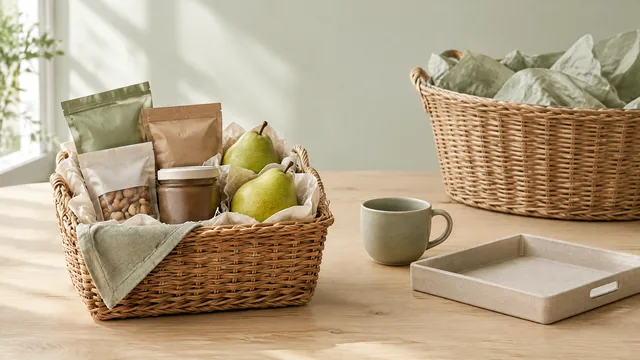
Start with a recipient brief, not a catalogue
Write down one clear purpose: a personal thank-you, a birthday treat or something for a household to enjoy together. Next, identify who will actually use the contents. A basket addressed to one colleague might be taken home rather than shared at work. Do not select office-friendly snacks unless sharing is what the recipient wants.
The Gift hamper page is a starting point for comparing hamper directions and presentation. Its navigation invites consideration of recipient preferences, but a browsing reference is not a confirmed contents list. Ask for the proposed assortment before deciding whether it suits your brief. [S1]
If you know little about the person, ask a discreet, ordinary question: ‘Would you prefer fruit or packaged treats?’ This preserves the surprise of the finished gift while reducing the chance of an unsuitable selection. Avoid guessing preferences from someone's age, job title or appearance.
Rank the priorities before comparing options
Separate requirements from preferences. An ingredient that must be excluded is a requirement; a ribbon colour is usually a preference. A basket that cannot meet a requirement should leave the shortlist, even if it looks impressive. Use the following checklist to decide what must be answered first.
Once the essentials are settled, choose one positive priority, such as favourite flavours or easy access to the contents. If two options fit equally well, presentation can break the tie. This is more useful than giving every extra jar or packet equal importance.
| Recipient situation | Priority | Question to resolve before ordering |
|---|---|---|
| Known ingredient restriction | Confirmed suitability comes first | Can you provide ingredients and relevant cross-contact information for every proposed food item? |
| Limited storage space | A manageable gift | What are the packed dimensions, and which contents need special storage? |
| Likes a narrow range of flavours | Familiar favourites over variety | Can the assortment focus on these preferred foods without unwanted extras? |
| Will carry the gift home | Portable packaging | What is the packed weight, and how is the container intended to be carried? |
| Wants to enjoy it gradually | Clear opening and storage instructions | What do the individual labels say about storage before and after opening? |
Read the contents list as things to use
An item count does not describe a gift's usefulness. A packet, a jar and a piece of fruit may each count as one item, despite very different amounts and uses. Ask for product names, pack sizes or weights and packaging format. Otherwise, a comparison based on ‘more items’ tells you little about what the recipient will receive.
Consider what happens after opening. A spread needs something to eat it with; a preparation ingredient needs cooking; a large pack may require resealing or another container. These are not drawbacks for everyone. They are drawbacks when the recipient wanted a ready-to-enjoy treat. Keep attractive extras only if they serve the intended use.
Set your budget before browsing, then compare confirmed total costs for baskets that meet the brief. Do not treat the container's size as evidence of value. A smaller gift with fewer unwanted contents may make better use of the same spending limit.
Treat fresh fruit as a practical choice, not a health promise
For someone who enjoys fruit, the Fruit basket page offers a presentation direction to explore. Choose around fruit preferences and the effort involved in eating the selection, rather than assuming any assortment is universally suitable. The page itself separates appearance from dietary suitability. [S3]
Ask whether the proposed fruit needs peeling or cutting and whether the recipient has a suitable place to prepare it. Request storage guidance for the actual assortment instead of assigning one shelf life to the entire basket. Hong Kong's Centre for Food Safety advises choosing safe raw materials and keeping hands and utensils clean; these principles do not establish a supplier's certification or the condition of a particular order. [S4]
Do not choose a ‘wellness’ theme as a promise of recovery or treatment. If food is intended for someone in hospital, obtain the recipient's and ward's permission before ordering. A smaller basket or a fruit-based gift does not remove dietary or receiving restrictions.
Let the recipient's day determine the handover
A thoughtful gift should not require an awkward detour. Find out whether the recipient will be at home, at an office or moving between locations. Identify who may accept the basket if they are unavailable, and whether that person can pass it on without a lengthy wait. Reception should not be assumed to provide food storage.
Use Gift hamper delivery in Hong Kong to explore gift formats, then ask about arrangements for your chosen address and date. The gifts page is a resource for considering recipient arrangements; it is not confirmation of a delivery slot for your order. Obtain written agreement on the handover plan before paying. [S2]
If the recipient must carry the gift home, ask for packed dimensions, weight and a practical carrying format. If the surprise would interfere with their day, reveal the delivery plan but keep the contents a surprise. Convenience can be part of the gesture rather than a compromise.
Keep substitutions aligned with the original priority
A replacement should preserve the recipient's reason for wanting the gift. Replacing a favourite savoury item with another sweet treat may increase variety while reducing usefulness. State which contents are essential, which can change and whether you need to approve replacements before packing. Do not assume a custom combination is available.
When exploring Gift basket delivery, ask how an agreed change would affect the contents and receiving plan. The same gifts destination introduces several presentation directions, but the exact assortment and any changes need separate confirmation. Keep the approved specification together with the agreed total and delivery instructions. [S2]
Send an enquiry that makes the priorities explicit
A short enquiry can describe the recipient without sharing unnecessary personal details. Specify preferences and restrictions, not a medical history. This fill-in wording gives the provider a practical basis for proposing an option:
‘I am choosing a hamper for [one recipient/a household] for [occasion]. They enjoy [preferred contents] and must avoid [confirmed exclusions]. The main priority is [easy enjoyment/compact storage/favourite flavours]. My spending limit is [budget]. Please propose the actual contents and sizes, relevant ingredient information, packed dimensions and weight, storage instructions, and any substitutions requiring approval. It would be received at [location] by [receiving role] on [requested date]. Please confirm available arrangements and the complete payable total before I proceed.’
Before ordering, check that the reply names the proposed contents, resolves essential restrictions and confirms who will receive it. On arrival, the receiver can check the contents against the agreed list, look for damaged packaging and pass on the storage instructions. If something is wrong, contact the provider rather than expecting the recipient to work around it.
Questions you may be asking
Should I buy a large hamper to make a personal thank-you feel generous?
Not necessarily. Generosity can come from choosing something the person genuinely enjoys and including a specific thank-you message. A large basket is useful only when its contents and physical size suit the recipient. Do not add unwanted items simply to make the gift look bigger.
How can I check preferences without spoiling a birthday surprise?
Ask about broad choices rather than the exact gift: fruit or packaged treats, sweet or savoury, something to enjoy immediately or gradually. A trusted household member may also help if they know the preferences accurately. Keep the final arrangement and message unrevealed.
Is a vegan-labelled hamper enough for a recipient with an allergy?
No. A vegan description and an allergy requirement answer different questions. Request ingredient and relevant cross-contact information for the specific proposed items. If a necessary safety question remains unanswered, do not order that food selection on the assumption that the label resolves it.
What if a client may not be allowed to accept gifts?
Ask the organisation's designated contact about its gift policy before arranging anything. Describe the intended gift and value if requested. Do not assume a shared basket avoids the rule. If permission is unclear or refused, choose a non-gift expression of thanks.
What should I do if the recipient will travel soon after delivery?
Ask whether they would prefer the gift after returning. If they still want it beforehand, select only a confirmed format they can manage during that period. Do not assume they can take food across a border or have someone else store the hamper for them.