
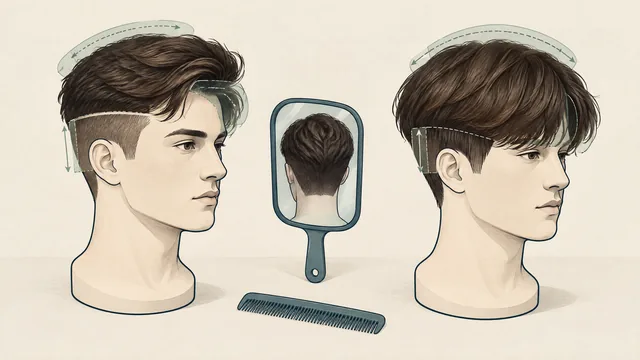
Stage one: name the length you are trying to keep
Start with what the longer top should eventually do. Will the front fall forward, move to one side or travel backwards? Choose one everyday direction rather than combining the fringe from one photograph with the crown from another. A front view establishes coverage; a side view shows how far the upper hair needs to overlap. If the reference hides the back, describe that area separately.
Show your current hair after your usual drying routine. Mark the front, upper sides and crown as separate areas to discuss, not one instruction to leave the top long. Some upper-side length may be needed for coverage even though it looks untidy now. Ask the stylist to identify what supports the eventual outline and what can be adjusted without restarting the grow-out.
Set a visible limit before the scissors start
Use a finger to show the shortest acceptable resting point of the fringe and the highest acceptable short section at the side. Then agree on any exceptions, such as a small front-edge adjustment. Keep a photograph of the agreed starting shape so the next visit has a clear reference.
Stage two: choose the boundary, not just the haircut name
For a deliberately separate upper section, Vit So's undercut haircut guide helps you compare an exposed division with a longer top that covers the join when resting. A disconnected outline has an abrupt length change at that boundary rather than intermediate lengths blending it together. That does not settle how short the lower sides should be or how high the short area should extend. [S1]
Alternatively, use the two block haircut guide to discuss a fuller upper shape over shorter sides and back, particularly if you want the top to retain softer-looking coverage. It is not the opposite of disconnection: references can overlap structurally, and names vary. Compare the actual upper edge, fringe and rear coverage instead of expecting the label to decide them. [S2]
Ask to consider both the resting position and the top moved aside. A boundary you like when concealed may feel too exposed when the hair shifts. If the top is not yet long enough to cover the short section you want, discuss an interim boundary rather than taking that section higher immediately. You can revisit the contrast once the necessary coverage is present.
Put natural texture, side width and styling effort in one decision
Width needs a location. Point to the lower sides if they project outwards, or to the upper edge if it forms a shelf above the ears. Both can occur together, but they are different requests. Keep the fullness you like at the crown in the conversation; asking to remove bulk everywhere leaves that preference unclear.
Use the table as a consultation starting point, not a test that assigns you a haircut. Choose the row closest to your current hair and explain any difference. Styling willingness means what you will repeat on an ordinary weekday, including after washing, rather than what you might attempt for an occasional photograph.
| Natural texture | Where width bothers you | Styling you will repeat | First decision to discuss |
|---|---|---|---|
| Straight, fuller top | A ledge above the ear | Finger-arranging only | Review upper-edge weight while protecting overlap; compare a softer two-block outline with visible disconnection. |
| Straight top with little natural bend | Lower sides project out | Dryer and a small amount of product | Choose the side boundary first; assess top direction separately before considering added movement. |
| Naturally wavy top | Upper overlap feels wide | Simple drying that keeps the waves | Check the dry wave pattern and edge coverage; start by retaining useful movement rather than adding more. |
| Natural curls | Top and sides appear wide together | Willing to reset curl shape | Assess the whole dry silhouette and crown coverage before establishing a sharply separate short section. |
| Fine, relatively straight top | Sides look wider than the upper shape | Minimal product and little brushing | Inspect coverage before removing upper weight; compare a less exposed boundary and a simpler daily finish. |
Stage three: decide whether movement is actually missing
A longer top and a curved top are separate goals. First ask to see how the retained hair sits with a simple finish you can reproduce. You may like the straighter version, or find your existing waves provide enough movement once the weight is arranged. If the reference only appeals because of its bend, identify exactly where that bend starts and where the ends should point.
If movement still matters, Vit So's men's perm information is useful for discussing the proposed top area, retained length and treatment history before any chemical service is agreed. Bring details of previous colour, bleaching, straightening or perming, including approximate dates and treated zones. The current hair needs assessment; the plan may remain cut-only, change in scope or wait until a later stage. [S3]
Do not use extra top movement as a substitute for resolving unwanted side width. Ask how the proposed bend would affect the outline and the apparent resting length of the front. Confirm which neighbouring areas would remain unchanged and what daily handling the proposed finish would involve.
Stage four: let each tidy-up have a limited purpose
Between visits, record the first change that bothers you: hair touching the ear, an upper shelf becoming prominent, a lost parting or fringe ends entering your view. Take front and side photographs in similar light with your usual styling. These observations help distinguish a side tidy from a top reshape; they do not automatically call for the same amount to be removed everywhere.
Before repeating a close side cut, confirm whether you still want the separate boundary long term. If your eventual goal has changed to a connected outline, say so while there is side length to preserve. Keeping the ear edge clear and shortening the entire side panel are different tasks. Set the next review around the change you want assessed, not a trimming interval borrowed from someone else's routine.
Take a staged brief to the next consultation
Try this wording: ‘I am growing the front to wear it to the side. Please protect the length needed for that and for coverage above the ears. The width bothering me is here, not at the crown. I want to compare a covered boundary with a visibly separate one. I usually use a dryer and finger-style; I would like to assess that finish before deciding about added movement.’ Change each detail to match your own goal.
Ask which areas would be cut, which would only have their weight adjusted, and which would be left alone. Request a quote for that agreed work and clarify whether washing, finishing and any optional treatment are included. Before leaving, check the relaxed side and back views and note the next decision to revisit. That keeps the grow-out moving towards a chosen shape rather than another version of your starting cut.
Questions you may be asking
Can I ask for the sides to be tidied while leaving the top untouched?
Yes, but identify the boundary first. Upper-side hair may contribute to the coverage you are growing towards. Ask what a side tidy would remove and whether any top-edge adjustment is being proposed, rather than assuming everything above the ear belongs to the short section.
What if my top is too short to hide a disconnected boundary?
Discuss an interim shape with a lower or less exposed short section, or accept visible contrast while the top gains length. Show the coverage you eventually want and ask which lengths need preserving now. Do not expect a reference's overlap before the relevant hair is there.
Should my two-block reference show the back as well as the fringe?
Ideally, yes. A rounded upper back over a tidy nape can differ substantially from a short panel carried higher. If you cannot find the same haircut from behind, describe the rear coverage you want separately and ask where the proposed boundary would sit.
Do I need a perm to stop a longer top looking like one solid block?
Not necessarily. Assess the cut's retained weight, your natural texture and an achievable styling routine first. If a particular bend is still missing, discuss its location and whether a chemical option is suitable after the hair and treatment history have been assessed.
What should I do if I decide to grow the sides later too?
Update the plan before another close side cut. Ask which side lengths would help build a future connection and which edges can still be kept tidy. Preserve a photograph of the current boundary so later reshaping can be discussed against the transition you actually want.