
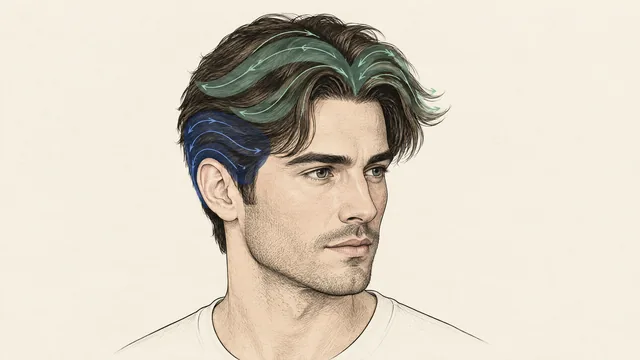
Choose the front you want on an ordinary morning
Picture leaving home for work rather than posing for a portrait. You may want a small opening above the forehead, front pieces that move towards the temples, and enough movement to avoid a straight curtain. That is already a useful description. It says more than asking for the exact centre part in a photograph whose drying and styling you have not seen.
Look at your current hair after your usual wash and dry. Note where it separates when you stop holding it, whether one side drops forwards, and where the ends rest. Take a front photograph without lifting the fringe, then a view of each side. These are records of what needs attention, not photographs you need to make flattering.
Decide what can be imperfect. A slightly shifted opening, unequal arcs or a few loose strands may fit your everyday version. Vit So's parting guide distinguishes a soft central opening from mirror-image halves and asks readers to consider existing growth direction. [S1] Keep that relaxed version beside the polished reference.
Read wavy and middle-part references differently
A wavy reference describes the bends you can see along the hair; a middle-part reference describes the opening and the direction around it. They can appear in the same photograph, but they answer different questions. You might like the front opening while finding the rest too wavy, or enjoy the movement but want less forehead exposed.
Use Vit So's wavy perm for men comparison to identify whether you want one gentle turn at the front or a more visible sequence of bends through the top. Its distinction is about visible movement, not a standard level of treatment strength. [S2] Trace a strand in your reference and mark where the movement starts. Leave unwanted crown height or extra side fullness out of the request.
The middle part perm guide is useful when your main question is how the front travels away from an opening rather than how wavy the whole top should become. [S1] Specify whether the ends should sweep towards the temples, fall beside the brow or turn further back. A central split alone does not communicate those choices.
Choose one reference for direction and one for looseness, then explain what you reject in each. This avoids asking the stylist to infer a single finished hairstyle from two conflicting photographs.
Put the top and sides into a two-zone brief
Divide a front-view photograph into two areas for discussion. Zone A is the top and flowing front. Zone B is the side outline around the temples and above the ears. You do not need to choose a technique for either zone; record the appearance you want and the lengths or coverage you want retained.
Keep direction and looseness separate within Zone A. For example, ask for an opening near the centre with the front moving outwards, but only a shallow bend rather than clearly repeating waves. For Zone B, identify the precise area that looks too wide instead of asking for everything to lie flat. The table turns those observations into a note you can take to the appointment.
| Decision | Zone A: top and front | Zone B: side outline |
|---|---|---|
| Direction | Where the opening sits; where each front end should travel | Which strands project outwards, and where |
| Preferred shape | Shallow turns or more visible waves; modest or higher lift | Some fullness retained or a closer outline |
| Length to protect | Front pieces needed for the sweep; acceptable forehead exposure | Temple coverage and how much ear should show |
| Usual routine | Dryer, fingers, brush or product you actually use | What you already do to settle the sides |
| Question to ask | Can the cut and styling support this direction? | Does this area need anything beyond the cut and styling? |
Give a side-control enquiry its own purpose
Once Zone A is clear, ask whether Zone B needs separate attention at all. Show the side outline with the front in its usual position. If the width bothers you only when you sweep everything backwards, say so; if it is present before styling, show that too. The connection between the long front and the side shape matters more than matching a trend name.
Use the down perm sheung wan service information to frame an enquiry about identified side sections that stand away from the head, not as a request to create the flowing front. Vit So describes down perm work as side control and treats added top movement as a separate design aim. [S3] Ask which area is being considered and what would remain unchanged.
Explain the side coverage you want to keep before agreeing to cutting or chemical work. A narrower outline does not have to mean removing every bit of thickness around the temples. Share previous colour, bleach, straightening or perm work on the retained sections so suitability can be assessed. A small requested area is not enough, by itself, to establish that processing is appropriate. [S3]
Test a routine, not just a finished pose
Tell the stylist what you will do at home: use a dryer to guide the front, arrange it with your fingers, apply one product, or leave it to dry with little intervention. These are different briefs. If you will not use a round brush or hot tool, make that clear before approving a reference that may depend on one.
Ask for a demonstration of the essential steps using the method you are willing to repeat. Separate those steps from optional finishing for photographs or an evening out. Which action opens the front? Which keeps its ends travelling in the intended direction? What needs attention at the sides? A demonstration should answer those questions rather than leave you trying to memorise every salon movement.
Agree on what a less-styled version would look like, and obtain washing and aftercare instructions for any actual treatment. [S1] [S3] Later, if the part closes or one side falls into your eyes, photograph it before repeatedly correcting it. Record whether the problem starts at the roots, the front ends or the side boundary. That gives a follow-up conversation a specific subject.
Send one enquiry with two clear scope questions
Combine your usual dry-hair photographs, the two marked references and a short message. Keep the desired appearance separate from the services being proposed. You can adapt this wording: “I want a soft opening near the centre, with the front sweeping towards the temples and loose bends rather than strong waves. I would like to keep temple coverage, but the area above my right ear stands out. I normally use a dryer and my fingers. Could you assess the front direction separately from that side area?”
Then ask what work is suggested for the top and what, if anything, is suggested for the sides. Confirm the cut, treatment areas, finishing instruction and applicable quote. A combined service name should not be taken to include extra waves above it. [S3] For a Sheung Wan visit, make the hairstyle enquiry directly with Vit So; it is separate from TCM Weight Lab's medical services.
If length is the obstacle, read Growing the Top Longer Without Letting the Sides Take Over before deciding what to shorten. For a specifically local bend, Want Movement Only at the Ends? helps refine the area you want changed. If you prefer a different parting while keeping side coverage, Keeping Side Length for a Formal Side Part explores that choice.
Finish the conversation with a brief you can repeat back: the opening, the bend visibility, the side coverage and the home routine. Those four decisions give you a clearer plan than an immaculate photograph alone.
Questions you may be asking
Do the two halves of a middle part have to look identical?
No. Specify how much difference you are comfortable wearing. One side may open more widely or sit closer to the forehead. Compare the balance around your face and ask whether a slightly shifted opening better suits the hair's existing direction.
I only like the opening in a wavy reference. How should I explain that?
Mark the opening and the outward travel of the front pieces, then say explicitly that you do not want the repeated waves elsewhere. Bring a second reference for the quieter bend you prefer. This gives direction and looseness their own instructions.
If I ask about down perm work, will that also create the sweep on top?
That is not the purpose described in the side-control service. Treat the flowing front as a separate aim and ask what cutting, styling or assessed treatment would address it. Confirm both areas rather than assuming the reference image is one included service.
Can I choose this look if I usually air-dry my hair?
Make air-drying part of the consultation from the start. Ask how the proposed shape would settle with that routine and what adjustments it may need. If the version you like relies on drying steps you will not use, discuss a more relaxed direction or different front length.
What should I record if the opening closes after I wash it?
Once washing is allowed under your treatment instructions, photograph the dry front before and after your usual styling. Note which side crosses the opening and whether the roots or ends change first. Share the routine you used so the follow-up can focus on the actual problem.