
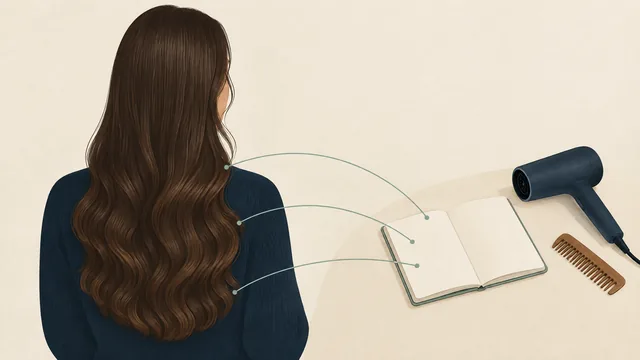
Decide what the waves need to do for you
Start with the situation you want to change. Perhaps your long hair hangs as one straight sheet over a plain work blouse. Perhaps you like it tied back during the week but want softer movement when wearing it down at weekends. Those are different goals from wanting a highly polished, separated wave every morning. Choose the everyday improvement first; the dramatic photograph can remain an occasional styling reference.
For a hair perm enquiry, Vit So's service information provides a useful starting point: discuss the movement together with the haircut, previous processing and your usual routine. [S1] Before deciding on a procedure, explain what you want to keep as clearly as what you want changed.
Write two priorities and one limit. For example: keep the longest edge below the chest, add movement when the hair is down, and avoid a finish requiring a full curling-tool session each weekday. This gives a stylist something more useful to assess than 'long, loose and easy'.
Place the first bend, not just the curled ends
Study the first visible change of direction in your reference. Does it begin beside the face, near the shoulders or much lower through the lengths? Mark front and back separately. You might want a gentle sweep around your face while keeping the upper back visually quiet. Hair brought forward over the shoulders can make placement look different from hair hanging down the back, so compare both views.
Use Vit So's guide to a perm for long hair to prepare questions about the first bend, existing layers and the dry length you want to retain. [S2] Bring those questions back to your own outline rather than assuming the reference's wave spacing will appear identical on your hair.
Protect the length that matters in real life
Define your minimum acceptable finish using a familiar landmark or action: ends still below a favourite jacket's collar, or front pieces still reaching your usual hair tie. A curve can change apparent length, while cutting changes actual length. Ask about both before agreeing to layers. Keeping the longest strands does not necessarily mean every shorter section will remain unchanged. [S2]
Test the reference against an ordinary wash day
Bring a photograph of your own hair after your usual drying routine, not only one taken after salon styling. Put it beside the inspiration image and compare the parting, fullness at the bottom, front sections and degree of separation between waves. Ask which details come from the proposed treatment and which would need finishing afterwards. A smooth crown and sculpted lengths in a photograph do not reveal how the hair was processed or styled. [S1][S2]
Next, identify what you are willing to repeat. Owning a dryer is different from using it to arrange the back sections carefully. Liking a styling product is different from wanting to apply and distribute it every wash day. The table below helps turn these habits into a useful discussion rather than judging any routine as better or worse.
| Your usual routine | What to ask about the waves | What to put in the budget |
|---|---|---|
| Mostly air-dry, with little arranging | Which parts of this reference depend on active styling? What would a simpler finish look like? | Only agreed essential products; decide whether the less polished outline is acceptable. |
| Dry the hair, then tie it back | Which front pieces need separate attention, and can they still reach the tie? | Your actual drying time and any extra front-section step. |
| Enjoy styling on selected days | Can the everyday goal be simpler than the reference finish? | Separate occasional tools or professional finishing from the normal routine. |
| Want defined waves whenever worn down | Which drying, arranging and product steps create that definition? | The complete repeatable routine, not just the first salon visit. |
Set a time ceiling as well as a spending ceiling
Use two budgets: money for professional work and time for ordinary grooming. Choose your own maximum extra mirror time, then describe the steps that fit inside it. If you normally wash in the evening, count the evening work too; moving it out of the morning does not remove it. Include washing, drying, arranging and the touch-ups you realistically intend to do.
When discussing a women's perm, describe an ordinary weekday and ask which steps are necessary for the proposed finish, rather than planning around an unstyled version of a polished photograph. [S1] Ask whether a demonstration with your existing tools can be included or arranged, and confirm its scope before booking.
Divide spending into the initial visit, home items and later professional work. Keep tools you already own separate from new purchases. Ask why each suggested product is needed before building a basket around the reference. If the plan exceeds either ceiling, decide what can change: accept a less defined everyday finish, reserve polished waves for selected days, or revise the wave goal. Do not assume chemical treatment removes all styling work.
Ask for a complete quote, not a wave-shaped price
Use the published perm cost information to identify the relevant menu entry, then ask for the total for your assessed plan. Vit So lists standalone services and named combinations separately, with a length-surcharge note that needs checking against the selected work. [S3] A lower headline amount is not a like-for-like comparison if one quote includes cutting and another does not.
Ask for the service name, proposed treatment area and included work together. Confirm whether washing, cutting, finishing and any pre-service protection sit inside the quote or are separate. If a menu name describes a technique, ask what procedure is actually proposed; a label alone does not settle method suitability. [S1][S3]
Keep later spending visible
Ask what later appointments might involve if you want to maintain the chosen outline, and which changes would need a fresh assessment. Request estimated costs for the work discussed, rather than inserting a universal repeat-visit interval into your budget. Record optional purchases separately from essential items. For each quote, leave a line for anything still unconfirmed, including the applicable length charge. Compare totals only once the same work is included.
Send a brief that makes the trade-offs clear
Prepare current front, side and back photographs, one main reference and a short processing history. Describe earlier colour, highlights, bleach, straightening or perm work by the sections still present in your lengths, including treatment now covered by darker colour. The current shade is not the whole history. Let the professional assessment establish what is appropriate for the hair you want to keep. [S1][S2]
A message you can adapt
'I would like to keep my long hair and discuss loose movement beginning around [landmark], with the upper area looking quieter. My shortest acceptable dry finish is [landmark or tie-back need]. I usually [washing and drying routine], and I can add [your time limit] for styling. My previous treatments are [history and sections]. My spending ceiling for this visit is [amount]. Please advise what is feasible and quote the proposed service, cutting, finish and any additional items separately.'
Before confirming, ask what simpler alternative would preserve your main priority if the reference needs more cutting, styling effort or professional work than you can accept. The useful outcome is an agreed everyday goal and clear scope—not merely agreement on the phrase 'loose waves'.
Questions you may be asking
If I only wear my hair down at weekends, is a perm the obvious choice?
Not necessarily. Separate your occasional polished look from your weekday goal. Ask whether styling your existing hair on selected days would meet the need, and compare that effort and spending with the proposed treatment and its everyday routine.
Can I keep the top quiet but have movement beside my face?
Describe the front and back as separate visual goals. Mark where each first bend should appear and show the parting you normally wear. The stylist can then assess how those aims connect with your layers and hair history; a quiet-looking crown does not identify the treated area.
Should I buy new styling tools before the consultation?
Bring a list of what you already own first. Ask which steps are necessary for the proposed everyday finish and whether your existing tools can support them. Buy only after understanding the routine, rather than trying to recreate equipment imagined from a photograph.
How can I compare two quotes when one includes a haircut?
Write down the treatment area, cutting, washing, finishing, protection and applicable extras for each. Ask for the missing items to be clarified. Compare the total for the work you actually need, not a standalone treatment against a different combination.
What if keeping length matters more than matching the wave photograph?
Say that before agreeing to cutting or treatment. Define both the longest edge you want retained and the shortest acceptable visible finish. Ask for an alternative placement or simpler outline if the reference conflicts with those limits.