
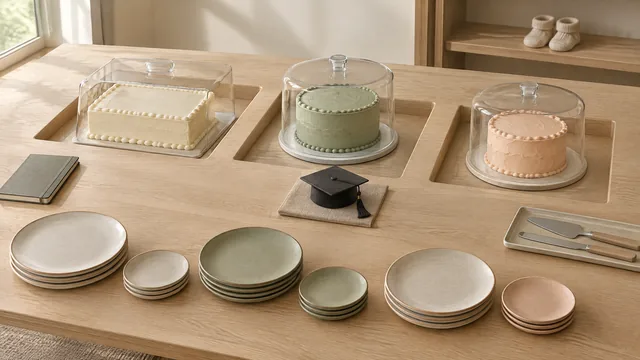
Separate the honouree from the eating group
An invitation list tells you who is welcome, not who wants dessert. Ask a simple question with the RSVP: will you have cake, and is there an ingredient requirement we should discuss privately? Keep an undecided category rather than treating silence as agreement. Someone may attend only the presentation, prefer the restaurant's dessert or decline cake altogether.
Use the following distinctions to guide the conversation. They are planning choices, not standard serving rules. The bakery still needs to explain the portions its proposed cake can provide.
| Celebration | Whose preferences lead? | Who may actually eat? | Question to settle first |
|---|---|---|---|
| Workplace farewell | Departing colleague, with team input | Colleagues staying for the serving | Does the honouree want cake and a public presentation? |
| Graduation gathering | Graduate rather than organiser alone | Graduate, invited friends and family | Is cake the main dessert or a small shared taste? |
| Hundred-day celebration | Parents choose the theme; eaters choose suitability | Adults and parent-approved older children, not the infant | Which guests want cake after the meal? |
| Birthday within another celebration | Birthday person's preferences remain separate | Guests who choose that cake | Are both milestones receiving equal acknowledgement? |
Farewell: honour a colleague without making everyone eat
Begin with the colleague's comfort. A surprise presentation may not suit someone who dislikes attention, and an elaborate joke can feel different when managers are present. Ask a trusted organiser to check whether the person wants a ceremony, a quiet tea break or simply a shared dessert. Confirm any name and message with someone authorised to approve them.
Then distinguish a personal favourite from a workable team choice. If the colleague likes a flavour few others want, discuss a modest celebration cake alongside a separately agreed alternative rather than assuming everyone will accept it. Keep dietary replies private; colleagues should not need to explain their medical circumstances in a group chat.
Explore the Farewell Cake page as an occasion-specific starting point for an enquiry. [S1] Bring the colleague's preferred style and the team's actual eating requirements, then ask which proposed design can accommodate both.
Graduation: let the graduate choose, then include the guests
Graduation arrangements are often made by parents, but the graduate may prefer something less formal than the organiser imagines. Offer a short choice of flavour direction and visual style instead of sending an overwhelming catalogue. Ask whether the gathering is an intimate family meal or a celebration with friends; those settings can call for different levels of decoration.
A younger graduate's preferences matter too, while ingredient decisions for child guests belong with their parents or carers. Do not describe one cake as suitable for all ages. For a mixed family group, ask about preferred portion size without assigning smaller portions solely by age or assuming older relatives dislike particular flavours.
The Graduation Cake page offers a graduation-focused resource to explore. [S2] Use it to discuss a theme, but confirm the actual decoration and writing area separately. A simple approved message can acknowledge the achievement without reproducing school branding or a copyrighted character.
Hundred-day celebrations: the baby is honoured, not fed cake
A baby-themed cake marks the family occasion; it is not infant food. Do not reserve an eating portion for the baby or make tasting it part of the photograph. The parents can celebrate with a cake-cutting picture while another adult manages the dessert. Keep removable decorations and serving tools away from the infant.
Ask the adults what they will enjoy after the meal. Include the parents' preferences without assuming that pregnancy, breastfeeding or a family role establishes suitability for a particular recipe. If older children are invited, their carers should decide whether they will have cake and what requirements need checking.
Browse the 100 Days Cake page for the occasion, then frame the enquiry around the adults and older children who have opted in. [S3] A gentle baby-inspired appearance does not establish anything about the ingredients or the cake's suitability for an eater.
A shared birthday needs its own preference check
When a birthday falls near a graduation or hundred-day gathering, combining celebrations can be convenient, but ask both organisers before merging the cakes. The birthday person should not become an afterthought, nor should the baby's parents be expected to surrender their chosen theme. Separate cards can carry longer wishes without crowding the dessert.
Compare a Birthday Cake as a separate option if the birthday person's preferred flavour or style conflicts with the main celebration. Two cakes are not automatically necessary: first establish whether the eating groups overlap and whether one agreed choice genuinely satisfies them.
Turn dietary requirements into specific questions
Ask guests to name the requirement rather than relying on broad descriptions such as 'healthy' or 'special diet'. An allergy, a vegan preference, a halal requirement and a gluten-free requirement call for different questions. Ask the bakery about the filling, frosting, decorations and preparation cross-contact, and keep its answer attached to the correct proposed cake.
A separate dessert is only helpful if the intended guest accepts it and its suitability is confirmed. Do not promise an allergy-safe slice because you removed a topping. If the bakery cannot answer a necessary question, tell the guest before ordering and agree an alternative instead of improvising at the table.
The Centre for Food Safety's Five Keys include keeping hands and utensils clean, separating raw and cooked food, and keeping food at a safe temperature. [S4] For this event, assign a clean serving area and follow the bakery's product-specific storage instructions. A general food-safety guide is not evidence of a supplier's certification.
Send an eater-led enquiry and appoint a serving owner
A useful enquiry can read: 'We are celebrating [occasion] at [venue] on [date]. The honouree prefers [flavour/style]. We expect [confirmed cake eaters], with [undecided guests] still to reply. Cake will be [the main dessert/a tasting after dessert]. The following requirements need separate answers: [requirements]. Please propose an option, explain its usable portions and confirm ingredients, decorations, packaging, storage guidance and the full quotation.'
Before accepting the cake, the receiver should check it against the agreed order and retain the ingredient and storage information. Name a serving owner who knows which guests have separate arrangements, removes non-food decorations as instructed and avoids casual substitutions. The receiver and server may be different people, but the information must pass between them. That handover makes the guest preferences useful beyond the ordering stage.
Questions you may be asking
Should the departing colleague's favourite flavour override the team's preferences?
Give their preference priority in the discussion, not automatic control over every portion. Ask whether they would enjoy a smaller personal choice or a shared flavour. Nobody needs to eat cake to take part in the farewell.
How should I handle a graduation guest who has not confirmed a dietary requirement?
Ask privately before finalising the order and leave their food choice unresolved until they reply. Do not substitute an assumed requirement based on age, appearance or family background. Share only the necessary preparation questions with the bakery.
Can the baby touch the cake during a hundred-day photograph?
Plan the picture without giving the infant cake, loose decorations or serving tools. An adult can hold the baby apart from the dessert while the parents pose for the celebration. Baby-themed decoration does not make the cake infant food.
Can one cake acknowledge a graduation and a birthday?
Yes, if both honourees agree on the shared design and the eaters accept the flavour. Approve two short greetings and confirm the available writing space. Use separate cards when the messages would otherwise compete.
Should I keep a slice for a colleague who cannot attend?
Ask whether they want one before reserving it. Confirm when they can receive it and whether the product's storage and transport instructions can be followed. If that arrangement is impractical, a card may be a more considerate gesture than an unplanned food parcel.