
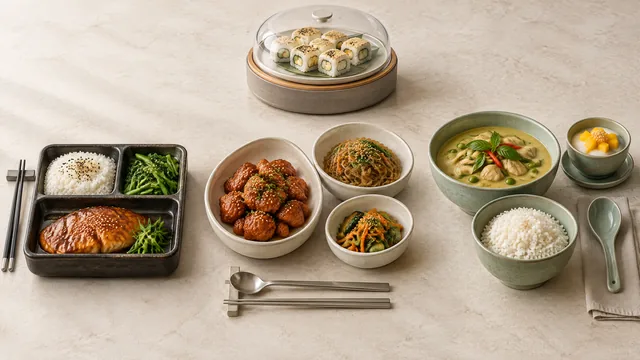
Start with meal roles, then compare the three menus
A dish count can be misleading. A tray of rice, a small sauce pot and a substantial main may each occupy one line on a quotation, but they do not make equal contributions to lunch. First decide whether guests need a seated meal, bites during a reception or food to take back to their desks. Compare menus against that purpose.
Use the table as an enquiry worksheet rather than a list of confirmed supplier dishes. Its examples help expose gaps and duplication: a menu with several rice-based items may need another vegetable component, while a collection of appetisers may still lack a substantial main. Ask for the actual contents before choosing.
| Meal role | Japanese-style example to discuss | Korean-style example to discuss | Thai-style example to discuss | Question that makes the comparison useful |
|---|---|---|---|---|
| Substantial main | Cooked chicken or fish | Chicken or another sharing main | Curry or a cooked sharing main | What is the edible quantity, and is sauce included in the stated weight? |
| Starch | Rice, noodles or rice-based sushi | Rice, noodles or rice cakes | Rice, noodles or bread | Does the main already include a starch, or is this a separate allocation? |
| Vegetable component | A separate vegetable dish | Vegetable dish or small accompaniments | Cooked vegetables or a salad | Is this a meaningful serving or a garnish-sized addition? |
| Sauce and seasoning | Dipping sauce or glaze | Coating, dip or separate condiment | Curry sauce or dipping sauce | Which seasonings are already incorporated and cannot be removed? |
| Dessert | An individually portioned sweet | A small pastry or rice-based sweet | A cup dessert or slice | How many portions are included, and what serving utensils are needed? |
Japanese: distinguish a cooked meal from a platter addition
A Japanese-style menu need not revolve around raw fish. YumYum's Japanese page describes cooked set-menu combinations with rice accompaniments, as well as different presentation formats. [S1] For lunch, compare the substantial cooked component with the starch and side allocation. A compartmented box may make individual distribution simpler; shared trays require a clearer portioning plan.
Explore Japanese Catering to compare the meal formats, then request a current component breakdown. If sushi is an extra, ask whether it replaces some rice or sits alongside the full meal. That distinction prevents ordering a second starch allocation when the intention was simply to add variety.
Consider texture as well as quantity. A glazed main and a breaded main pose different questions about sauce packaging and presentation. Ask how each is intended to be served, rather than assuming all cooked Japanese dishes can be handled identically.
Korean: assess the balance beyond the headline main
The Korean destination presents fried-chicken-led combinations alongside rice dishes and smaller savoury items. [S2] The useful comparison is how much of the meal is a substantial main and how much is starch or accompaniment. Rice cakes, noodles and rice should appear separately on your worksheet, even when they are presented as different dishes.
Use Korean Catering as a starting point for comparing components, then ask which items can be changed. If two chicken dishes are proposed, establish whether they differ mainly in coating or also in format and serving size. Two sauces add choice, but do not necessarily broaden the meal's overall balance.
Do not use the cuisine name as a heat rating. Ask about each dish's seasoning, whether a mild version is possible and whether sauce can genuinely be supplied separately. For mixed preferences, a confirmed mild main is more useful than a vague promise that guests can avoid the chilli.
Thai: clarify how sauced mains and accompaniments work together
The Thai page describes a combination of aromatic cooked mains, rice or noodle accompaniments and dessert formats. [S3] When comparing a curry with a drier sharing dish, ask whether the quoted quantity includes sauce and what accompanies it. A generous-looking container does not reveal the allocation of solid ingredients.
Explore Thai Catering to identify formats worth discussing. Request the exact pairing for each sauced main: rice, bread or another accompaniment should be explicit. For an office meal, also check whether the proposed containers, spoons and bowls suit guests eating at desks rather than from a buffet plate.
Dietary checks must include sauces and pastes, not just the visible main ingredient. Ask for a dish-specific ingredient response and separate information about cross-contact. Neither a vegetable-based appearance nor a cuisine label establishes vegan, halal or gluten-free suitability.
Sushi and sashimi: count the contents, not just the platter
For a sushi addition, record rice-based pieces separately from sliced fish. They play different roles in the meal, so a total piece count alone is a weak comparison. Ask for the proposed mix, piece sizes and any cooked alternatives, then establish whether the platter is an appetiser or part of the main meal.
Review Sushi & Sashimi Catering when comparing platter formats, but confirm the current contents and handling arrangements directly. Specify which guests will eat from that platter; others may need a complete cooked meal rather than a smaller share of the same order.
Treat chilled platters as a separate service task from hot mains. The Centre for Food Safety advises separating raw and cooked food and keeping food at safe temperatures. [S4] Agree suitable storage, dedicated utensils and a release-to-service plan instead of placing every dish on one table at arrival.
Make quotation units comparable before choosing
A per-person set, a tray weight and a platter piece count cannot be compared directly. Ask what each quoted unit includes. For shared dishes, request the stated meal servings and edible quantity where available. Bone-in items and sauce-heavy dishes deserve particular clarification; container dimensions are not a substitute for serving information.
Have quotations separate the main, starch, vegetables, extras and equipment. Confirm whether utensils, setup and clearing are included or separately charged, and request a written total for the same guest count and venue conditions. This makes differences visible without assuming that any advertised package remains available.
Send a component-led enquiry and assign receiving duties
A ready-to-send enquiry is: ‘Please propose Japanese, Korean and Thai options for [guest count] at [venue] on [date], served as [desk lunch/shared meal/reception bites]. For each option, list the main, starch, vegetable component, sides and dessert with portion units. Please identify incorporated sauces, confirm whether the attached dietary requirements can be met, and explain packaging, equipment and handling instructions. Quote optional sushi separately and show the complete total.’
Nominate a receiving lead to check the written menu against delivered containers, verify dietary labels and pass handling instructions to the service lead. The venue contact should confirm storage space and access to suitable equipment before the order is finalised. If the programme changes, the service lead needs an agreed response for food still awaiting service, not an improvised display decision.
Questions you may be asking
Is a menu with more dishes necessarily better for a full lunch?
No. Count substantial mains and meaningful side servings separately from sauces, garnishes and sweets. More dish names may mean greater variety without enough main-course food. Compare the meal roles and stated servings for the same guest count.
Should sushi replace the rice in a cooked Japanese set?
It can replace part of the starch allocation if the actual platter mix and portions support that plan. It can also be a separate appetiser. Ask the caterer to show both configurations rather than subtracting rice solely from the platter's total piece count.
How can a mixed group compare spicy Korean and Thai options?
Request a dish-by-dish seasoning description and a confirmed mild main. Establish which sauces are already incorporated. A separate dip gives guests a choice only when the underlying dish itself meets their preference.
Can we take one component from each cuisine for a mixed menu?
Ask whether individual components can be quoted separately; do not assume substitution is offered. Check that the final combination has a clear main, suitable starch and vegetable serving. Also confirm compatible packaging and service equipment for every selected dish.
What should we clarify about small Korean side dishes?
Ask whether they are garnish-sized accompaniments or substantial shared servings, and how they are portioned. They should not automatically be counted as the menu's full vegetable allocation. Confirm ingredients and dietary requirements for each side separately.