
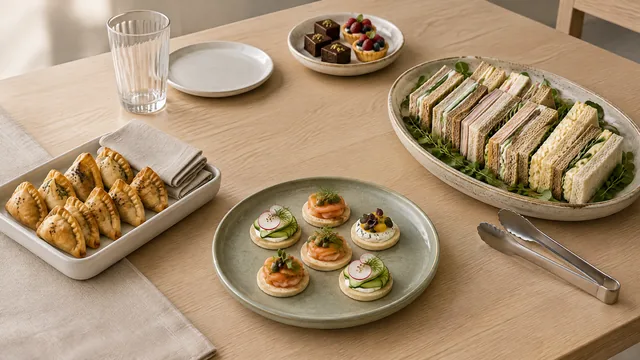
Compare handling, not just menu names
For ordering purposes, separate the eating format from the serving format. Ask whether each item needs fingers, a pick, a fork or a plate. Then ask whether guests collect it themselves or someone offers it on a tray. A description such as ‘bite-sized’ does not answer both questions.
Imagine the actual movement through your gathering. At a networking reception, guests may carry a drink and a bag. At an office break, they may return to desks. At a house party, some will sit while others remain standing. Choose food that works for the least-supported position, or provide an obvious place to put things down.
| Format to consider | Works best when | What to check before ordering |
|---|---|---|
| Handheld finger food | Guests mingle and can manage a napkin | Bite size, drips, crumbs, bones and disposal needs |
| Small composed canapés | Guests want a brief, tidy bite between conversations | Base stability, topping height and whether a plate is needed |
| Sharing platters | Guests can stop at a fixed collection point | Actual contents, serving tools and space for plates |
| Individual sweet portions | Dessert follows a break or a change of activity | Handheld versus spoon-served items and a clear collection route |
Use platters where guests can pause
A platter is useful when there is a stable table and room to choose food without blocking the doorway. Put plates before the food, provide an appropriate serving utensil for each selection and leave somewhere nearby to rest a drink. A large display is less helpful if guests must reach across one another to serve themselves.
YumYum’s platter page describes sharing selections such as sandwiches, cheese boards and fruit displays. [S1] Explore Food Platter Delivery to compare this table-based approach, then ask for the contents and portion breakdown of the proposed platter. Do not interpret ‘one platter’ as a standard number of meals.
Test finger food with a drink in hand
The useful test is not merely whether an item fits in the hand. Can a guest take it, eat it and finish with somewhere to put the waste? A sticky coating, loose filling or bone changes that sequence. For a mingling event, favour manageable portions and explain any need for small plates or disposal bowls in the service brief.
Explore Party Finger Food Catering as a resource for comparing handheld party options. Ask which proposed items remain easy to handle in your chosen serving arrangement. If guests include people who prefer seated eating, offer a place to sit rather than expecting the same format to work for everyone.
Choose canapés for a tidy, composed bite
A canapé’s visual detail is useful only if it survives the journey from tray to mouth. When assessing a proposed item, consider whether its base can support the topping and whether it can be eaten without dismantling it. A tall garnish may look attractive but needs a practical handling explanation.
YumYum presents its canapé service for receptions, corporate networking and private parties. [S2] Use Canapé Catering to explore that presentation style, then confirm the proposed pieces and whether service is stationary or tray-passed. Delivery of food does not by itself establish that serving staff are included.
Count portions by the job the food must do
Decide whether you are offering a welcome snack, food during a break or the main eating occasion. The same piece count can feel generous before dinner and inadequate when guests expect their evening meal. Tell the caterer what happens before and after service, including whether another meal is planned.
Request counts by item, not just a total. Several small topped bases are not automatically equivalent to several substantial filled rolls. For a sharing selection, ask how it is portioned and what the stated serving estimate assumes. Record savoury and sweet quantities separately, then identify any portions reserved for late arrivals or dietary requirements. These are allocation questions, not a universal pieces-per-person rule.
Give dessert its own eating plan
Dessert can mark a change of activity rather than compete with savoury food at the same collection point. Check whether guests will still be standing: a small cake portion with icing may need a plate, while a dessert cup needs a spoon. Keep a clear route for used utensils so the display does not become a clearing station.
The provider’s dessert-table page describes themed sweet displays. [S3] Explore Dessert Table Catering when comparing a separate sweet station. Confirm the proposed desserts, display equipment, setup and collection responsibilities in the quotation; the appearance of a display does not explain its service requirements.
Receive food before opening the station
Name a receiving person who knows the order and has access to the serving area. They should check containers, counts and any agreed ingredient information, then follow the confirmed storage and handling instructions before guests arrive. Agree in advance who will replenish trays and who will clear plates, picks and wrappers.
The Centre for Food Safety’s Five Keys include keeping hands and utensils clean, separating raw and cooked food, and keeping food at safe temperatures. [S4] Build these principles into the receiving plan. Ask about the handling needs of each proposed dish and the venue’s suitable facilities. For allergies or dietary requirements, request ingredient and cross-contact information; do not treat a menu label as a complete safety answer.
Send an enquiry that makes quotations comparable
A useful enquiry describes how people eat before asking for a menu. You can send: ‘We are planning an event on [date] at [venue], with [guest count] attending between [times]. Most guests will be [standing/seated], and the food is intended as [a snack/a meal]. We have [available tables and storage facilities]. Please suggest suitable handheld items or canapés and identify anything needing plates, cutlery or seated eating.’
Continue: ‘Please show the count of each item and the contents of each platter. Our dietary requirements are [details]; please explain ingredients and cross-contact arrangements. Separate food, delivery, setup, equipment, staffing and collection in the quotation. Our receiving person is [name or role]. Please confirm venue access requirements, handling instructions and responsibility for replenishment and clearing.’ This gives both sides a concrete basis for discussing a workable format.
Questions you may be asking
Are finger food and canapés mutually exclusive?
No. A canapé can be eaten by hand and served on a sharing platter. Compare the actual item’s handling needs and serving method rather than treating the three terms as competing package types.
Can a platter work at a party without dining tables?
It can work as a fixed collection point if guests can take manageable portions. It does not solve the lack of support for plates or drinks. Check the food itself and provide resting surfaces or some seating.
What should I ask about a per-person canapé quotation?
Ask for the count and type of pieces allocated to each person, the intended meal role and any shared items. Confirm whether delivery, setup, staff and equipment are included or quoted separately.
Should sweet bites be included in the savoury piece count?
Keep them separate when reviewing quantities. Desserts have a different role and may appear later. A combined total can hide how much savoury food guests actually receive.
How can I help guests identify dietary portions?
Agree clear ingredient information, designated serving utensils and an identifiable collection arrangement with the caterer. Ask specifically about cross-contact. Separating a portion on the table does not establish how it was prepared.