
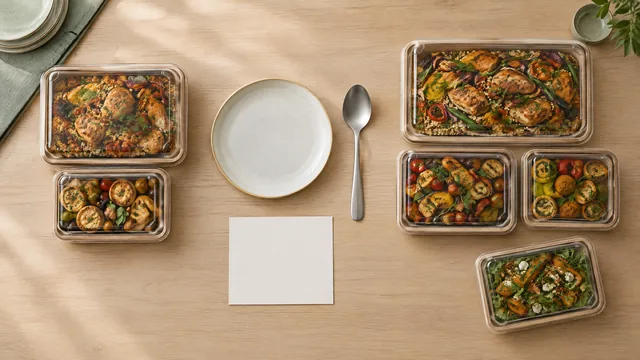
Count people who need this meal, not just invitations
Start with confirmed guests and say what you are feeding them. An office lunch replacing everyone's usual meal is different from refreshments after a meeting. For a home gathering, record any substantial food you are preparing separately. Do not let a cake or a bowl of crisps stand in for a missing main course.
Keep uncertain attendees in a separate line and set a date for confirming them. Include hosts and helpers who will eat, not only invited guests. Ask families what their children are likely to eat rather than automatically counting every child as half an adult. The aim is a clear meal brief, not an apparently precise formula based on age alone.
Turn the ten-person label into quantities you can check
YumYum presents its smaller option as food for a small gathering. The checked overview does not provide an itemised piece-count or weight schedule. Use the 10 Person Catering Package as a starting point, then ask for the quantities in the particular menu being quoted. [S1]
Record each dish in its own unit. Countable food needs a piece count and an indication of size. Shared rice, noodles or other bulk dishes need a stated quantity and the supplier's serving guidance. A tray count is not enough unless its contents are specified. For food with bones or shells, ask how the quoted quantity relates to what guests can actually eat.
Keep categories separate. A starter piece, a main-course serving and a dessert portion perform different jobs; adding them into one total produces a misleading comparison. First check the core meal, then check how the smaller items will be shared.
Find out what the twenty-person upgrade changes
The provider also has a medium-gathering overview. When exploring the 20 Person Catering Package, request a side-by-side list against your smaller quotation rather than assuming every dish doubles. The checked page does not establish dish-by-dish quantities. [S2]
An upgrade could mean larger quantities, additional dishes or a different menu structure. Establish which applies to your quote. If extra variety is the main difference, it may not resolve a shortage in the dish everyone expects to eat. Conversely, increasing every dish can create unnecessary surplus when only the main course needs attention.
For a hypothetical gathering of fourteen confirmed lunch guests, ask for a smaller-menu quotation with the shortfalls filled and a larger-menu quotation for comparison. Neither is automatically correct. Compare whether both provide a complete lunch for those guests, then consider variety, cost and space. This is a planning example, not a claim about either package's capacity.
Use a dish-gap table before choosing the larger order
Mark each menu category as adequate, short or unclear. An unclear quantity calls for a question, not an automatic upgrade. Use the Catering Packages overview to explore alternatives once you know which part of your menu needs changing.
The table below compares actions, not supplier inclusions. Fill it with the current quotation and ask the caterer to confirm the resulting meal plan.
| What your check shows | What to compare | What needs confirmation |
|---|---|---|
| Core meal is adequate; one countable starter is short | Extra pieces of that starter versus the larger package | Piece size, extra quantity and whether additions can be ordered |
| Shared mains and accompaniments are both short | A revised smaller menu versus a full upgrade | Dish quantities and complete-meal coverage in each quotation |
| Meal is adequate; dessert is short | A dessert addition rather than more savoury food | Dessert portion count and dietary requirements |
| Several guests cannot eat the main selection | Suitable separate meals or menu substitutions | Ingredients, preparation and cross-contact arrangements |
| Tray quantities are unspecified | An itemised quotation before changing package size | Contents, weights or piece counts and intended serving role |
Use platters to fill a defined gap, not hide one
The platter overview describes sharing formats including sandwiches, fruit and cheese. Explore Food Platter Delivery if a specific addition could complete your plan, but obtain the current contents and quantities before counting it towards the meal. [S3]
Name the purpose of the addition: extra substantial food, a starter to share or dessert. A visually full platter does not tell you how many meal portions it contains. Ask how it complements the existing menu and whether guests will also take food from the main dishes.
Check dietary coverage separately from total quantity. A menu can contain enough food overall while leaving one guest without a suitable meal. Vegetarian, vegan, halal and gluten-free requests need distinct answers; ask about relevant ingredients and cross-contact rather than treating any one label as assurance for all requirements.
Compare the payable total and the serving space
Request quotations using the same date, venue, guest count and menu role. Have food additions, delivery, tableware, equipment and any service charges shown separately. Confirm which items are included rather than comparing a package headline with an all-inclusive alternative. Current availability and order changes also need the supplier's acceptance.
At a Hong Kong flat or office pantry, check that the proposed trays fit the clean serving surface and available storage or holding equipment. Assign someone to receive the order and reconcile it with the agreed quantities. The Centre for Food Safety's Five Keys include clean hands and utensils, separation of raw and cooked food, and keeping food at safe temperatures. Ask for handling instructions suited to the actual dishes and venue. [S4]
Send a brief that can produce a useful answer
Adapt this enquiry: 'We have [confirmed count] guests needing [lunch, dinner or refreshments] on [date] at [venue]. We will also provide [other food]. Please compare your smaller option with appropriate additions against your larger option. For each, list dish names, piece counts or quantities, intended meal servings, suitable options for [dietary needs], and all separate charges. Please identify which quantities increase in the upgrade and confirm whether additions and substitutions are available.'
On receipt, check dish names and quantities against the final order before setting everything out. Locate any separately agreed meals and keep their serving utensils distinct. Note missing items promptly and follow the supplied handling instructions. That final reconciliation checks whether the portions you approved are the portions you can serve.
Questions you may be asking
Does a twenty-person package contain twice as much of every dish?
Do not assume so. Request the quantity of each dish in both quotations. A larger menu may change variety as well as volume, so check which increases address your actual meal shortfall.
Can I choose a ten-person option for more than ten guests?
Only after confirming coverage for your event. Explain whether it is a full meal and what other food is provided. Ask the supplier to assess the menu and any additions against your confirmed diners.
What if the supplier describes portions only as large trays?
Ask what each tray contains, its weight or piece count, and the intended number of meal servings. Tray size alone is not a reliable comparison when dishes have different contents.
Should I upgrade just because some RSVPs are unanswered?
Keep those guests separate from confirmed diners. Ask when quantities must be finalised and whether later changes can be accepted. Decide how to cover uncertainty before ordering, rather than treating every unanswered invitation as attendance.
Is an extra fruit or dessert platter enough to avoid upgrading?
It can address a dessert gap, but not an inadequate main meal. Check core meal coverage first, then count the platter's actual portions and confirm that its contents meet relevant dietary needs.