
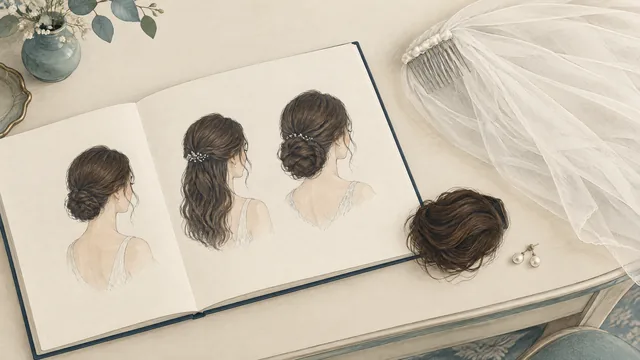
Choose the outline before choosing extra hair
If your ponytail feels light, a photograph of a large bridal bun can make added hair seem essential. But you may actually want the photograph’s clear neckline, soft parting or small curve beside the cheek—not its full size. Name those details separately. A compact gathered shape could meet your priorities even if it looks different from the reference.
Describe what happens with your own hair: whether the ends separate, the crown lies close to the head or waves relax after styling. These observations help distinguish a fuller-looking end line from more height or more length. Fine strands and the amount of hair available are different considerations; the phrase ‘my hair is fine’ does not settle either styling or attachment suitability. [S1]
When preparing a bridal hair enquiry, send the dress neckline, current hair photographs and the actual accessory alongside a reference labelled with the features you want to keep. Vit So’s page also asks readers to clarify the hair-only scope and required salon departure time rather than assume a complete wedding-day package. [S2]
Give your existing hair a fair trial first
Ask to discuss an existing-hair version of the preferred outline before deciding what is missing. A trial, if available, can explore a compact low twist, controlled loose movement or a half-up arrangement. The useful comparison is not ‘small versus glamorous’; it is whether the face framing, visible back shape and accessory placement satisfy you.
Judge the whole outline rather than a close-up of the crown. Take front, side and back photographs with the same parting and dress neckline visible. If you like a deliberately airy finish, some movement may be welcome. If you want a defined end line, ask whether styling alone can create enough visual substance and what happens as the finish settles.
| Desired feature | Test with existing hair | Question before adding hair |
|---|---|---|
| A clear neckline | Compact low twist or gathered shape | Is more bun size actually important to you? |
| Soft shoulder-length movement | Loose styling with selected face framing | Is the missing feature fuller ends, more length or both? |
| Front hair kept away from the face | A modest half-up arrangement | Where would connections sit beneath the gathered sections? |
| A prominent veil or comb | The actual piece in the proposed position | Can the hair and fastening support it without uncomfortable pulling? |
| A larger back silhouette | The largest comfortable existing-hair version | Can an assessed amount of added hair create the extra shape with suitable support? |
Make added hair a specific, conditional proposal
If the existing-hair test leaves a clear gap, describe that gap precisely: a fuller low bun, less transparent ends or extra length below the shoulders. Each asks for a different distribution of hair. Adding length may also change where your natural ends sit within the finished silhouette, so it is not simply a larger version of a volume-only plan.
Use Vit So’s discussion of hair extensions for fine hair to prepare two separate questions: which natural hair could carry the proposed amount, and which hair would cover the connections in the wedding style? Its guide distinguishes support from concealment and treats placement, weight and the intended outline as assessment questions. [S1]
Compare a removable piece, if appropriate and available, with a fixed attachment proposal rather than choosing by a method name. Ask who would fit and remove it, whether your own piece can be accepted, and what styling its fibre permits. A wedding-only goal does not by itself make either option suitable. Decide which detail you would reduce if the preferred amount or placement cannot work.
Test the accessory as part of the hairstyle
Bring the veil’s actual comb or clip, not just a photograph of its decorated edge. Show a tiara or hair vine from the fastening side too. Ask where the piece will sit, which part of the hair will hold it and how its position affects the shape you like. Extra hair should not be assumed to solve accessory support. [S2]
At an agreed trial, practise turning your head, looking down and sitting against a chair back. Try the earrings and consider any high-collared tea-ceremony outfit. Then test veil removal with the person who will help, following the stylist’s instructions. Check the remaining hairstyle from behind; the comb may have covered a detail that becomes visible later.
With proposed attachments, inspect the intended parting, gathered sides and area behind each ear. These are different views from loose hair falling over the connections. Ask how much visibility you can accept rather than treating a ‘seamless’ description as proof. Report pulling or pain during fitting: the American Academy of Dermatology advises having a painful or overly tight area loosened. [S4]
Leave the trial with a written decision checklist
Arrange the trial’s scope before arriving: one main outline, an agreed alternative and the specific accessory test you need. Ask how your hair should be prepared; do not assume every trial calls for unwashed hair. Bring your treatment history and mention previous attachment discomfort or difficult removal. A trial enquiry still needs availability and charging confirmed. [S2]
Record what you want repeated
Note the parting, exposed ear, face-framing length and bun position. Keep photographs you are comfortable sharing. Record the natural lengths that must stay if any blending cut is proposed, and ask which hair would be trimmed. This avoids turning approval of a finished look into permission for a broader haircut.
Record what needs changing
Identify the exact problem: the back looks too wide, the veil catches the collar or a front section falls into your eyes. Ask which adjustment addresses it. If waves settle during the trial, say whether the softer result remains acceptable. Avoid requesting more product or more added hair before deciding what needs to improve.
Record the fallback and responsibilities
Agree which simpler outline you would accept if the accessory or added-hair plan changes. Clarify who places and removes the veil, what you may adjust yourself and whether later restyling is a separate request. Distinguish your salon departure deadline from the ceremony time so transport, dressing and photographs have their own place in the schedule.
Plan the morning after as carefully as the wedding morning
A fitted arrangement may continue beyond the celebration. Read the hair extensions service information when comparing supplied hair, fitting, blending and future removal, then ask for a quote covering your assessed plan. Vit So separates those requests and asks clients to confirm the available method and materials before planning installation. [S3]
For a removable option, request a demonstration of taking it out and storing it. For fixed attachments, ask for instructions covering washing, drying, detangling and sleeping around that actual system, plus the review and removal arrangements. Explain if you will leave for a honeymoon soon afterwards. Do not rely on a universal maintenance interval or improvise removal by pulling at unfamiliar connections. [S3]
Put the first fitting, wedding styling and follow-up work on separate lines in your budget. Confirm whether accessory fitting, any trial and any supplied hair are included or separately charged. Your final brief can then be simple: the outline you prefer, the accessory you will use, the changes you can accept and the care you are willing to undertake. A decision to use only your own hair is a complete styling plan, not an unfinished one.
Questions you may be asking
Does a light ponytail mean I need extensions for a bridal bun?
Not necessarily. Test whether a compact bun or twist gives you the neckline and face framing you want. If a larger back shape is essential, ask what added hair would contribute and whether your hair can support the proposed arrangement. Ponytail size alone does not decide suitability.
Should I choose my veil before the hair trial?
Having the actual veil makes the test more useful because its fastening and removal can be checked. If you have not chosen it, share the type you are considering and ask what remains unresolved. Do not treat a trial with a different comb or clip as confirmation that your final piece will fit identically.
Can I add fullness without making my hair longer?
A proposal may focus on fullness at your existing length or within a gathered shape. Ask where the extra hair would sit and what blending would involve. Retaining the end length does not remove the need to assess supporting hair, connection coverage and care.
What if I want the veil removed before dinner?
Include removal in the agreed trial discussion and inspect the hairstyle afterwards. Ask who will help and which fastenings they should handle. If you also want a different evening outline, make that a separate scope and availability question rather than assuming veil removal includes restyling.
What should I confirm if my honeymoon starts soon after the wedding?
Explain the departure date before agreeing to fixed attachments. Ask how the actual system should be cared for during travel and what checks or removal can be arranged. For a removable piece, learn removal and storage before you leave. Choose the option whose follow-up you can realistically manage.